
Valley Replacement & New Lead Valley — Brighton
Failing roof valley fully stripped, rebuilt from the deck up with a new code-compliant lead valley, and tiles reinstated — water ingress resolved on a residential property in Brighton.
Project Details
The Problem
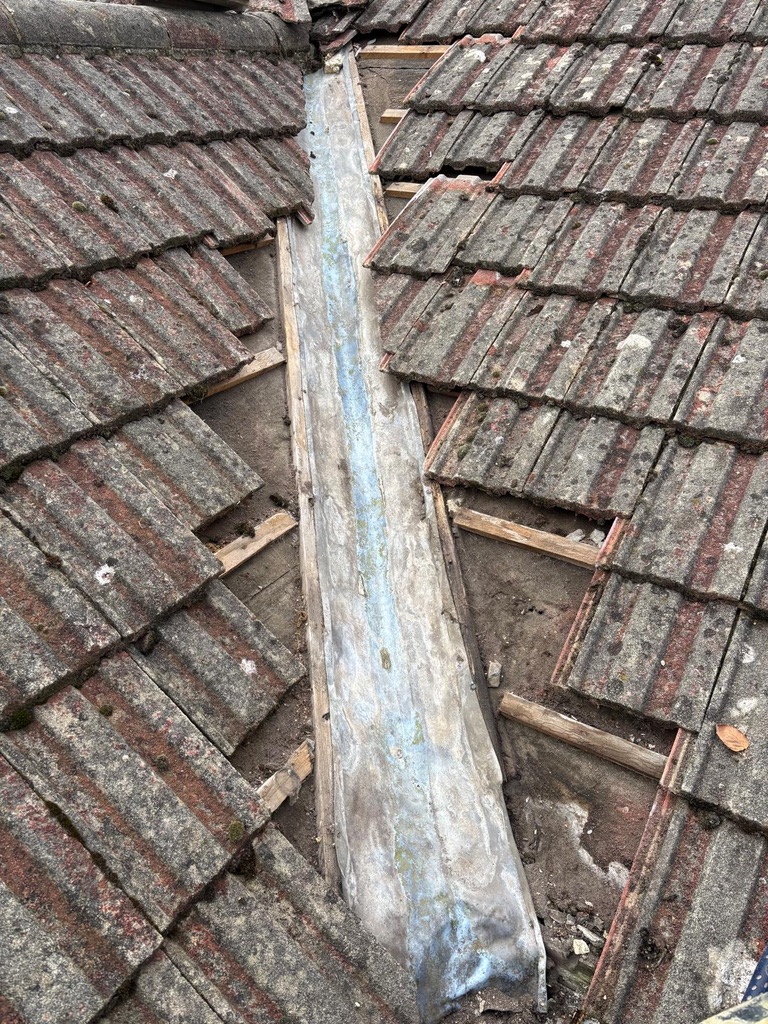
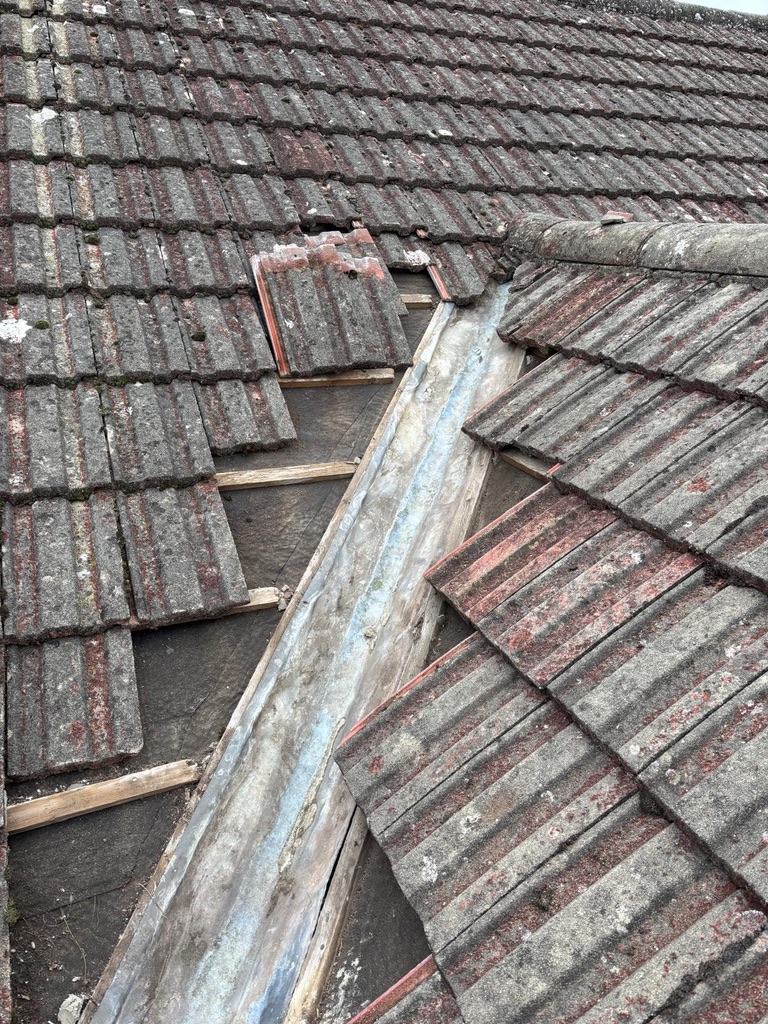
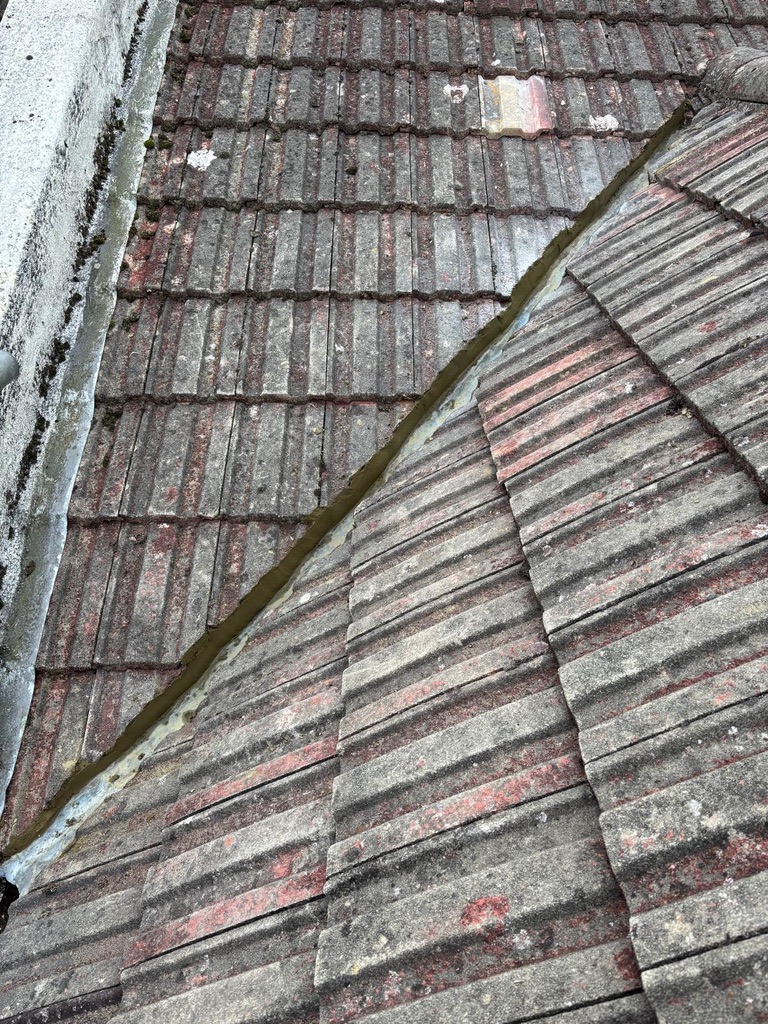
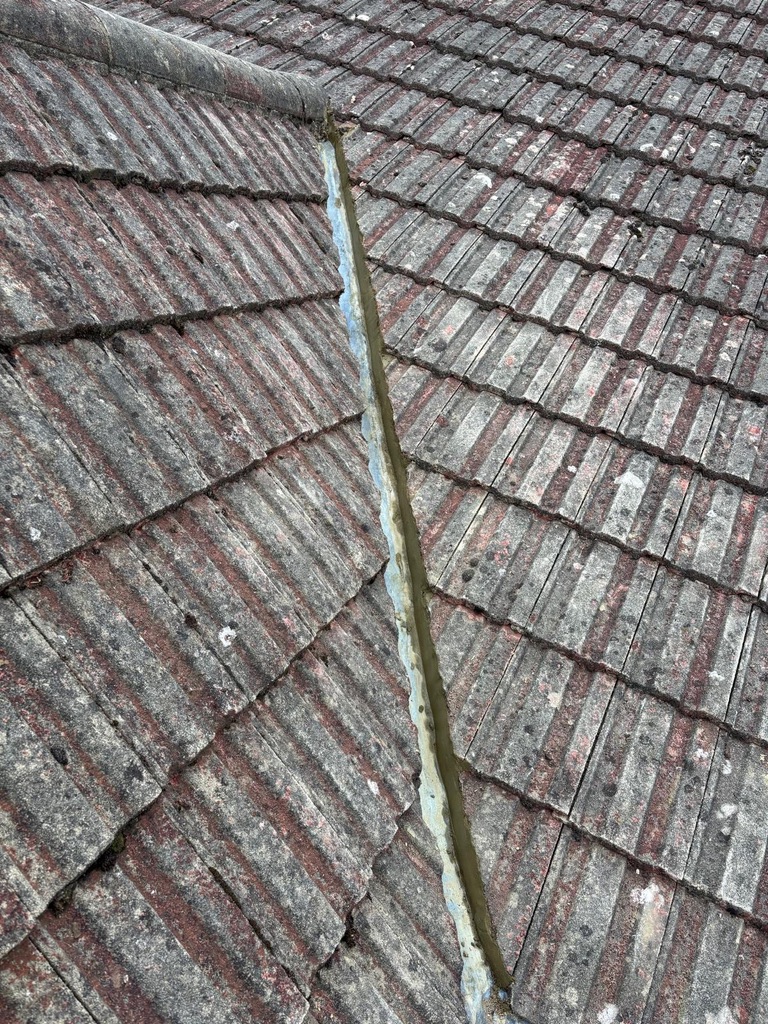
This Brighton roof valley had been patched with mortar over the years — a common temporary fix that never lasts. The original lead was cracked and leaking, the mortar infill had failed, and underneath the tiles the battens were rotten and the underlay degraded. Water ingress was active and the underlying structure needed addressing, not just the visible surface.
The Work
All surrounding tiles were stripped back to expose the full length of the old valley. Once cleared, rotten battens were replaced, new breathable roofing membrane installed, and a brand-new code-compliant lead valley fitted to ensure long-term weather protection. With the structure fully restored, existing tiles were refitted securely and damaged ones replaced to achieve a consistent finish and correct water flow.
The Result
The active leak is resolved. The valley now drains correctly, the structure beneath is sound, and the roof has a full waterproofing system that will outlast any mortar patch by decades.
Project Gallery
Frequently Asked Questions
Most valley failures are caused by the original lead being undersized or poorly detailed, mortar infill cracking over time, or the timber deck beneath the lead rotting from trapped moisture. Once any of these fail, water finds a path under the tiles and into the roof structure. Temporary mortar patches only mask the problem and tend to crack again within a season.
Small isolated defects in otherwise sound lead can sometimes be welded or sealed as a temporary measure. Where the lead is cracked through, mortar-patched, corroded or underlain by rotten boards, a full replacement is the only reliable solution — partial patches on failing lead rarely last more than a season or two before the same problems return.
Roof valleys should be lined with a minimum of Code 4 lead, though Code 5 is preferred for longer-lasting performance. The valley needs to be wide enough to accommodate the full range of water flow from both roof slopes, with correct drips at intervals to prevent thermal creep.
A single valley on a standard residential roof typically takes 1–2 days — one day to strip back, assess and prepare, and a second day to install the new lead and reinstate tiles. Longer valleys, complex junctions or roofs with extensive batten and underlay damage will add to the programme.
Need Similar Work?
We deliver the same quality and attention to detail on every project. Get in touch to discuss your requirements.