
Lead Wall Capping on a Balcony Parapet — Brighton
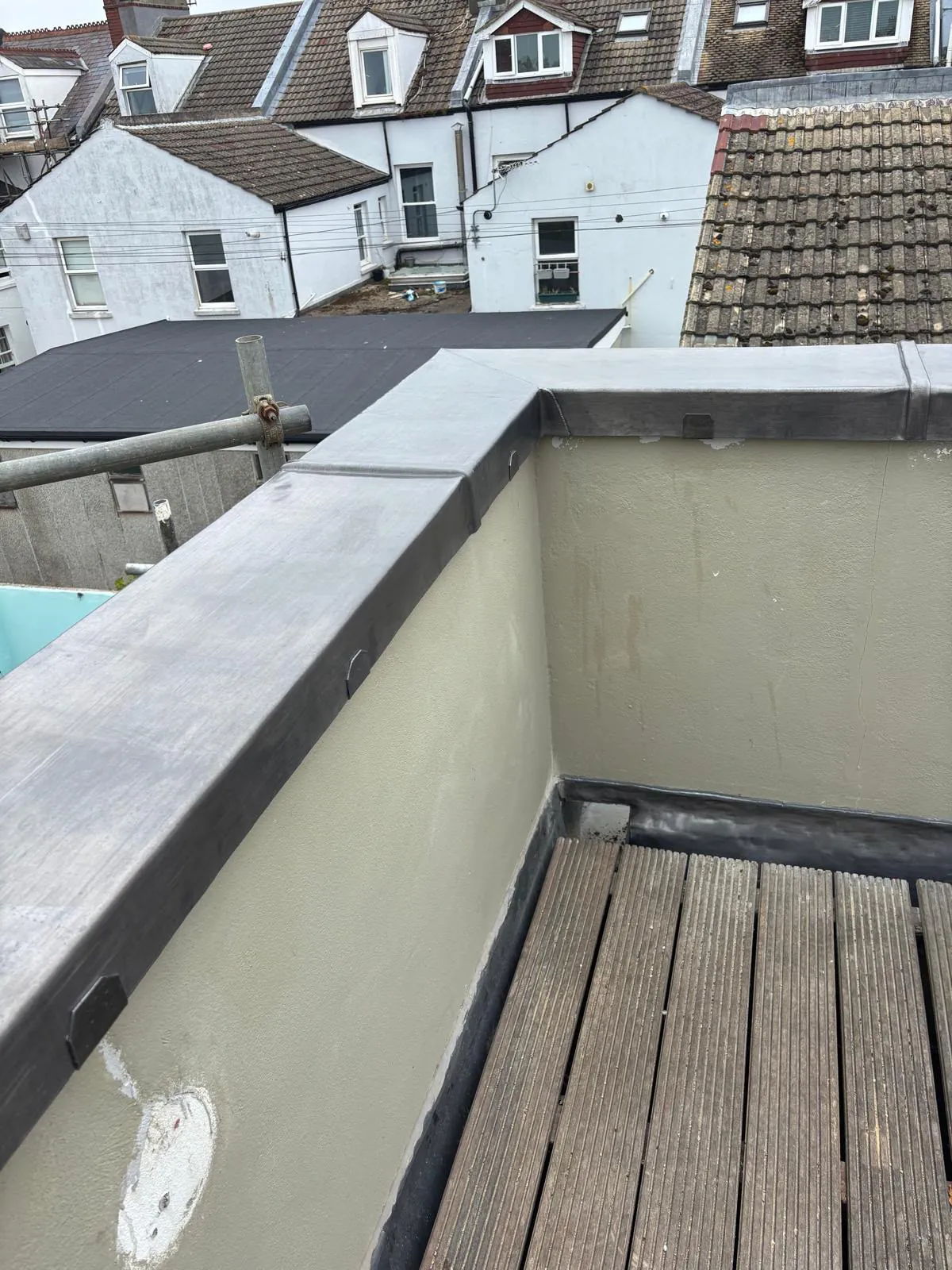
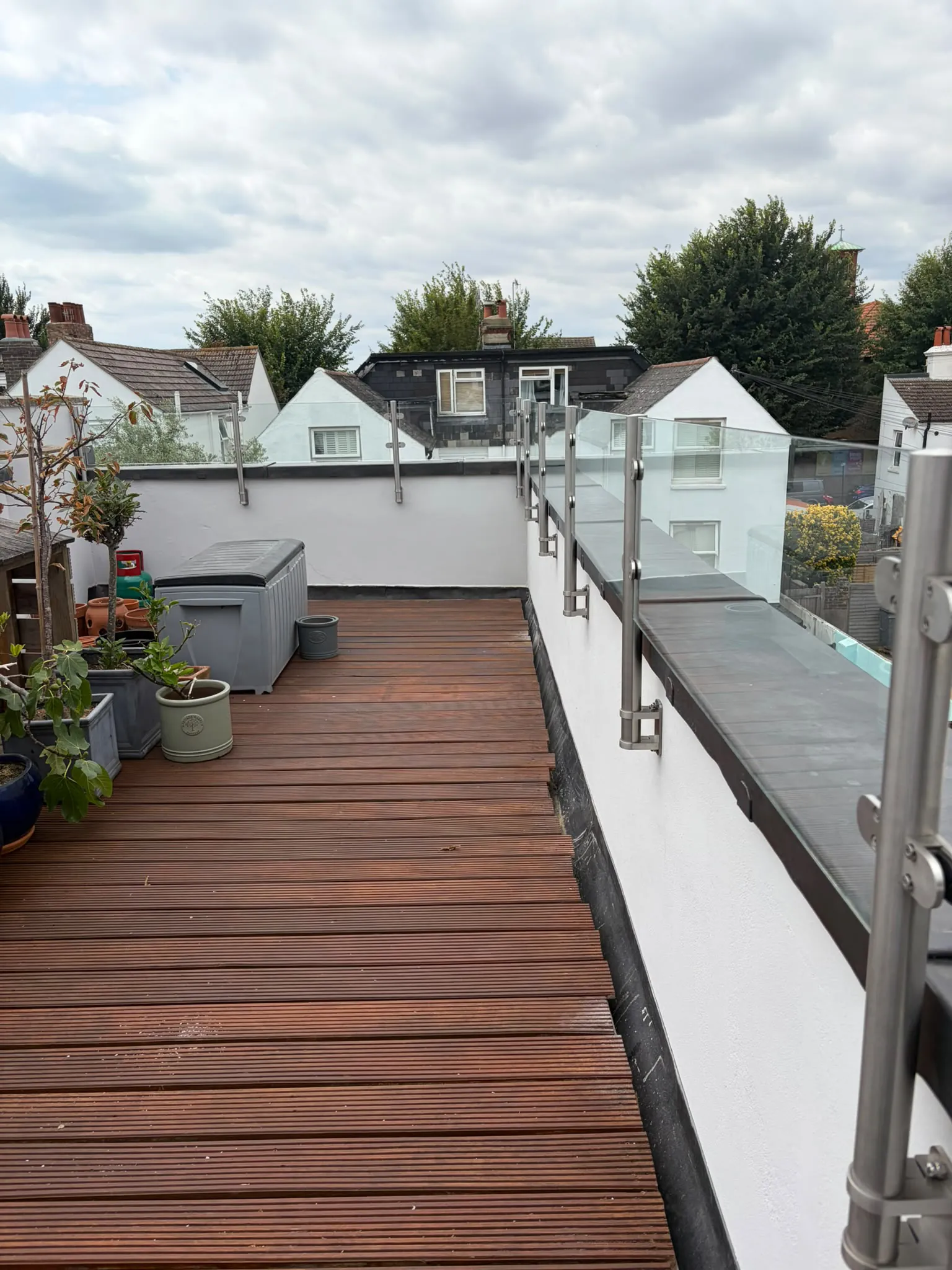
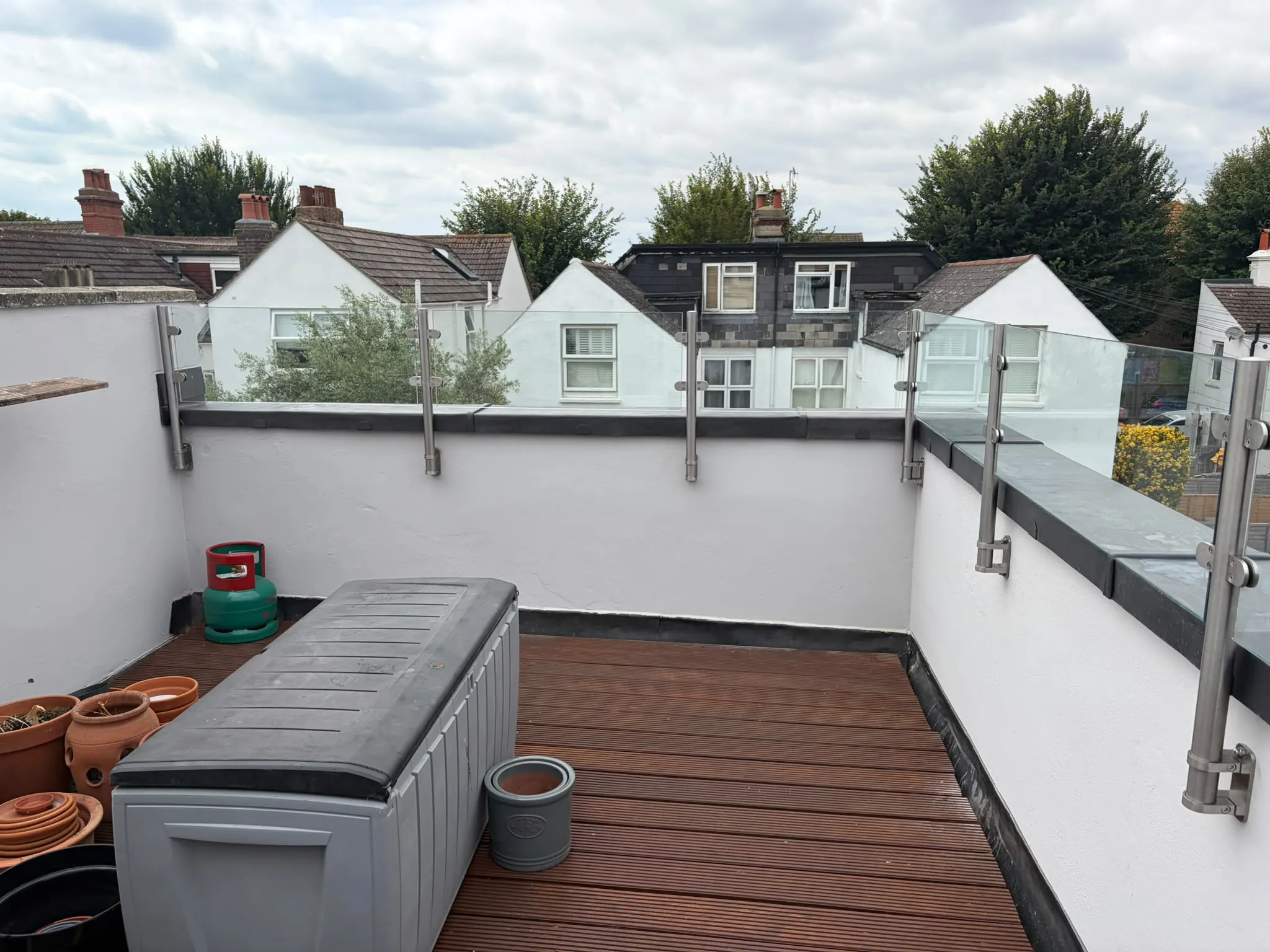
Leaking coping stones removed from a Brighton balcony wall and replaced with Code 5 lead capping on an 18mm marine ply base — all corners fully welded and the glass balustrade reinstalled.
Project Details
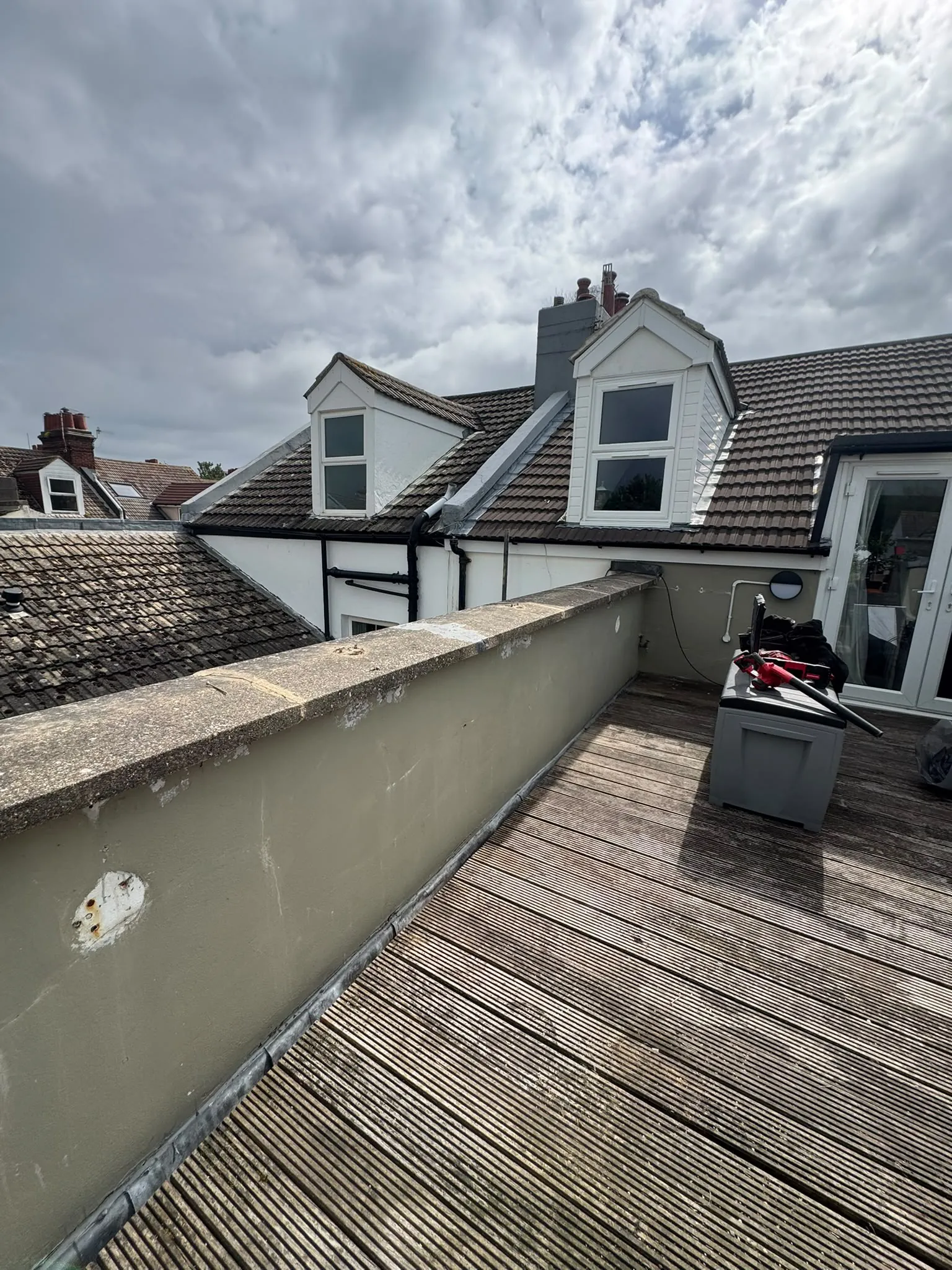
Our customer was experiencing water ingress through the joints in the coping stones on her balcony wall. She opted for a long-term fix — capping the wall in lead.
The Problem
Coping stones are laid in short sections, and every joint between them is a potential leak. Over time the mortar in those joints cracks and lets water track down into the wall below. On a balcony parapet the wall is fully exposed to the weather on every side, so once the joints failed, water was getting in each time it rained.
The Work
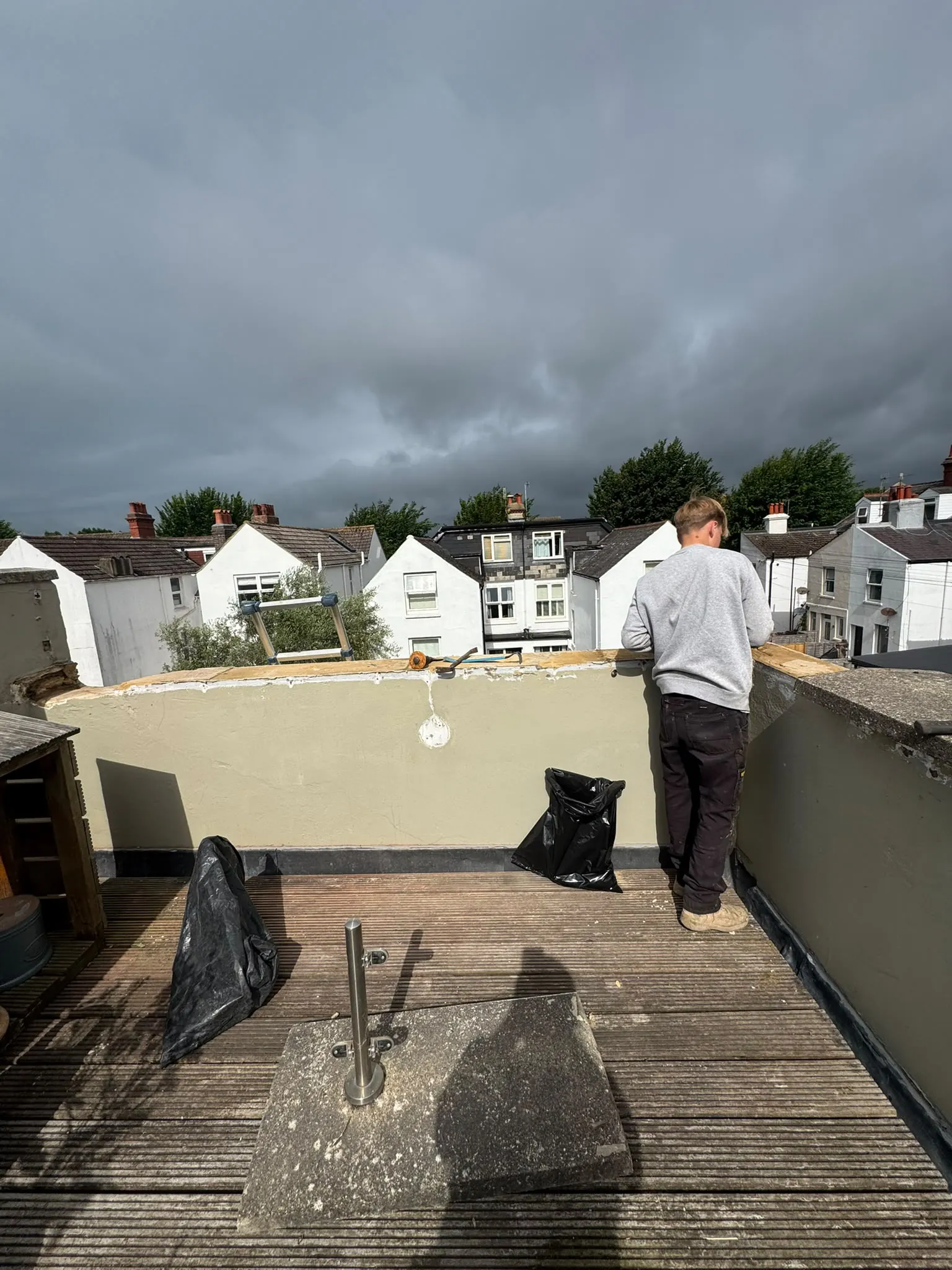
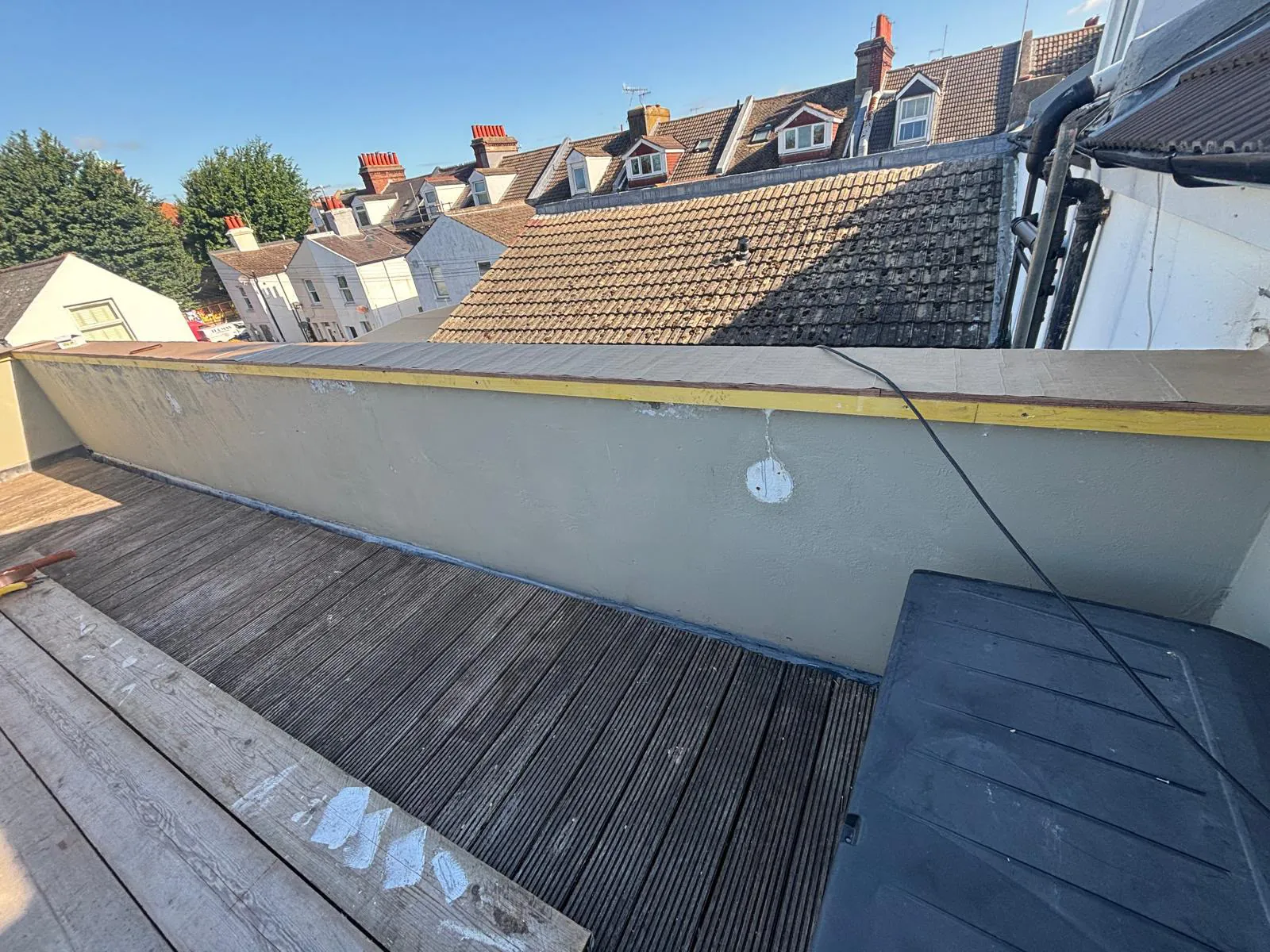
- Coping stones removed. The old coping stones were taken off and the top of the wall cleared.
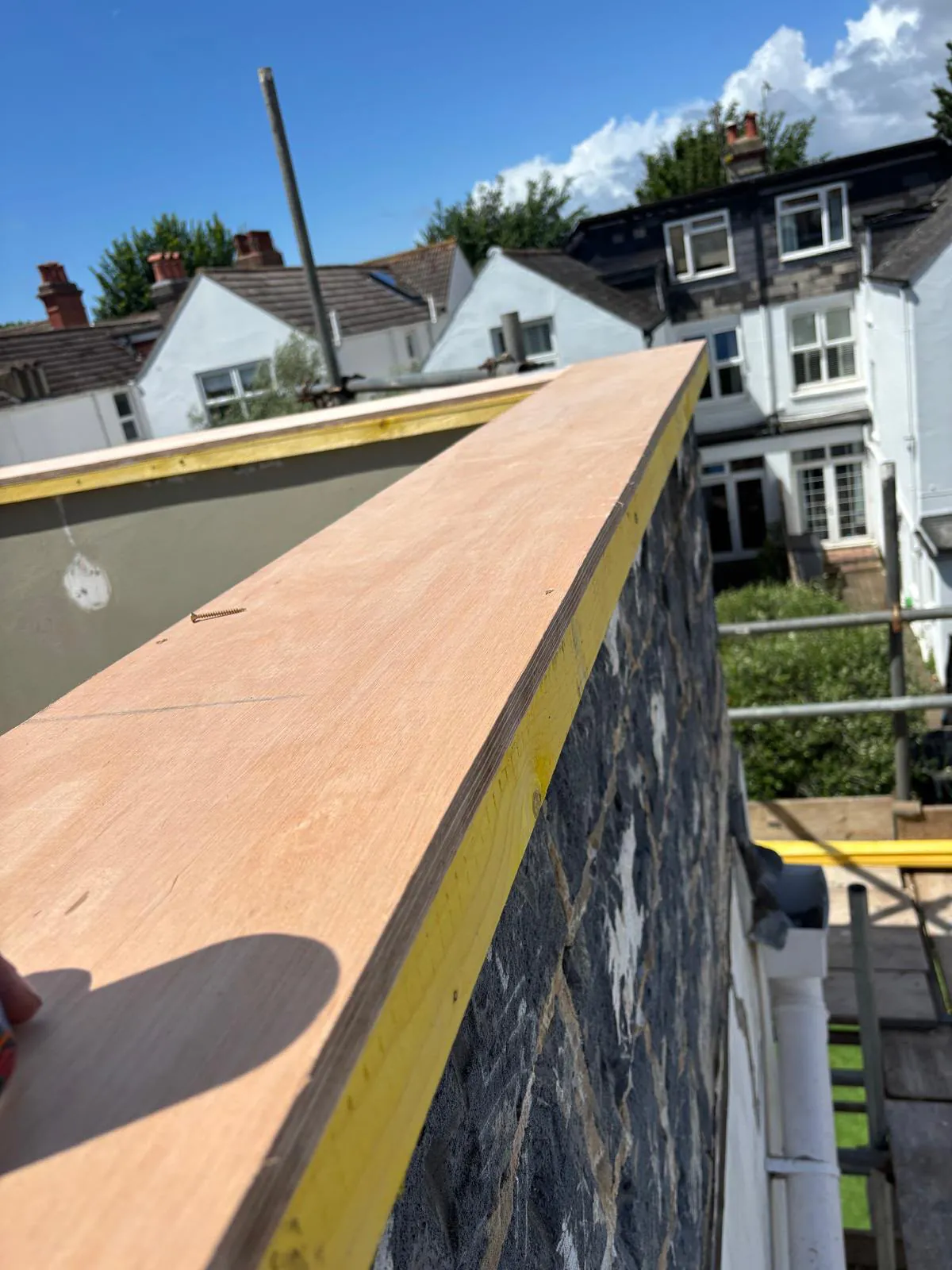
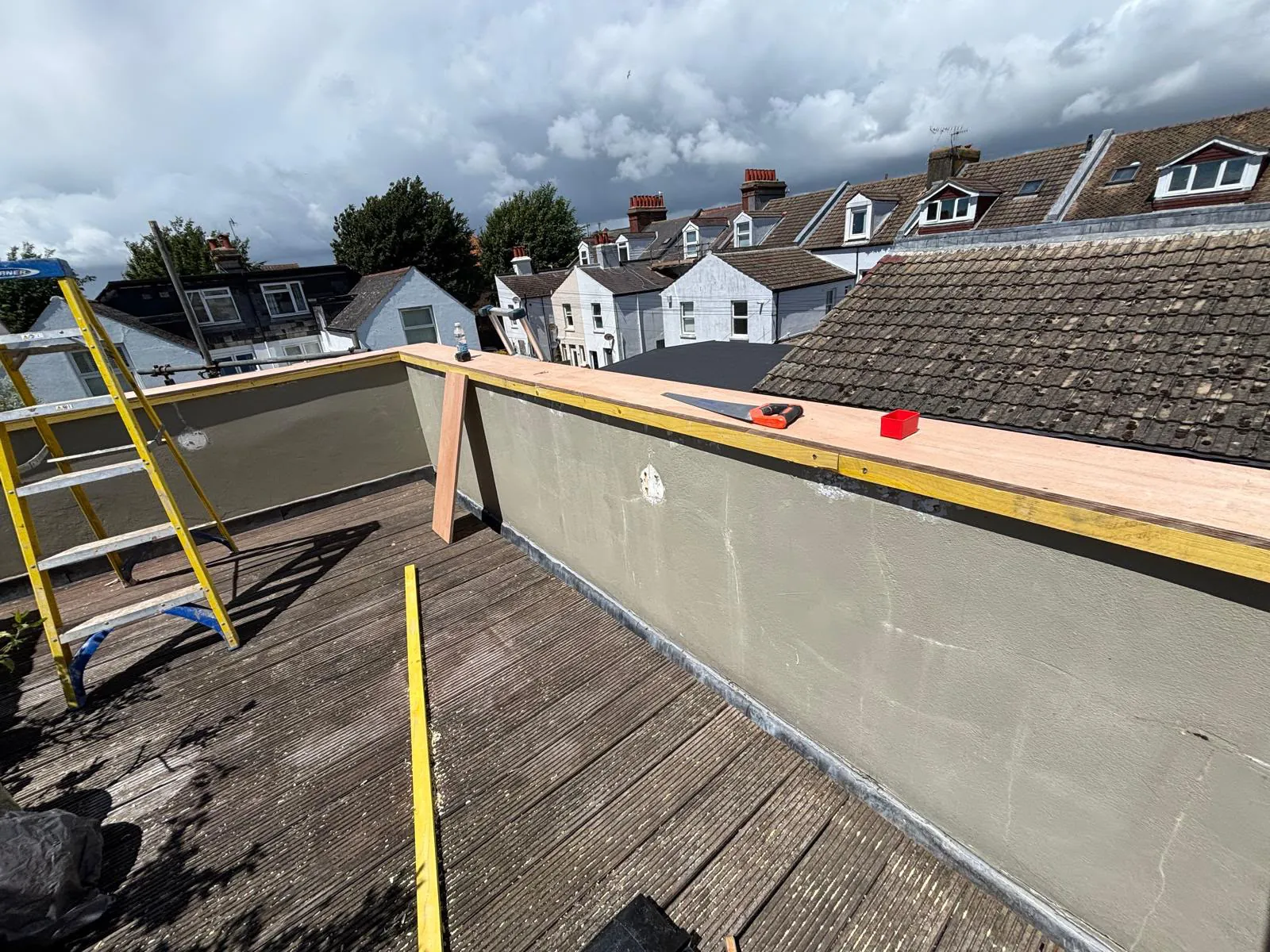
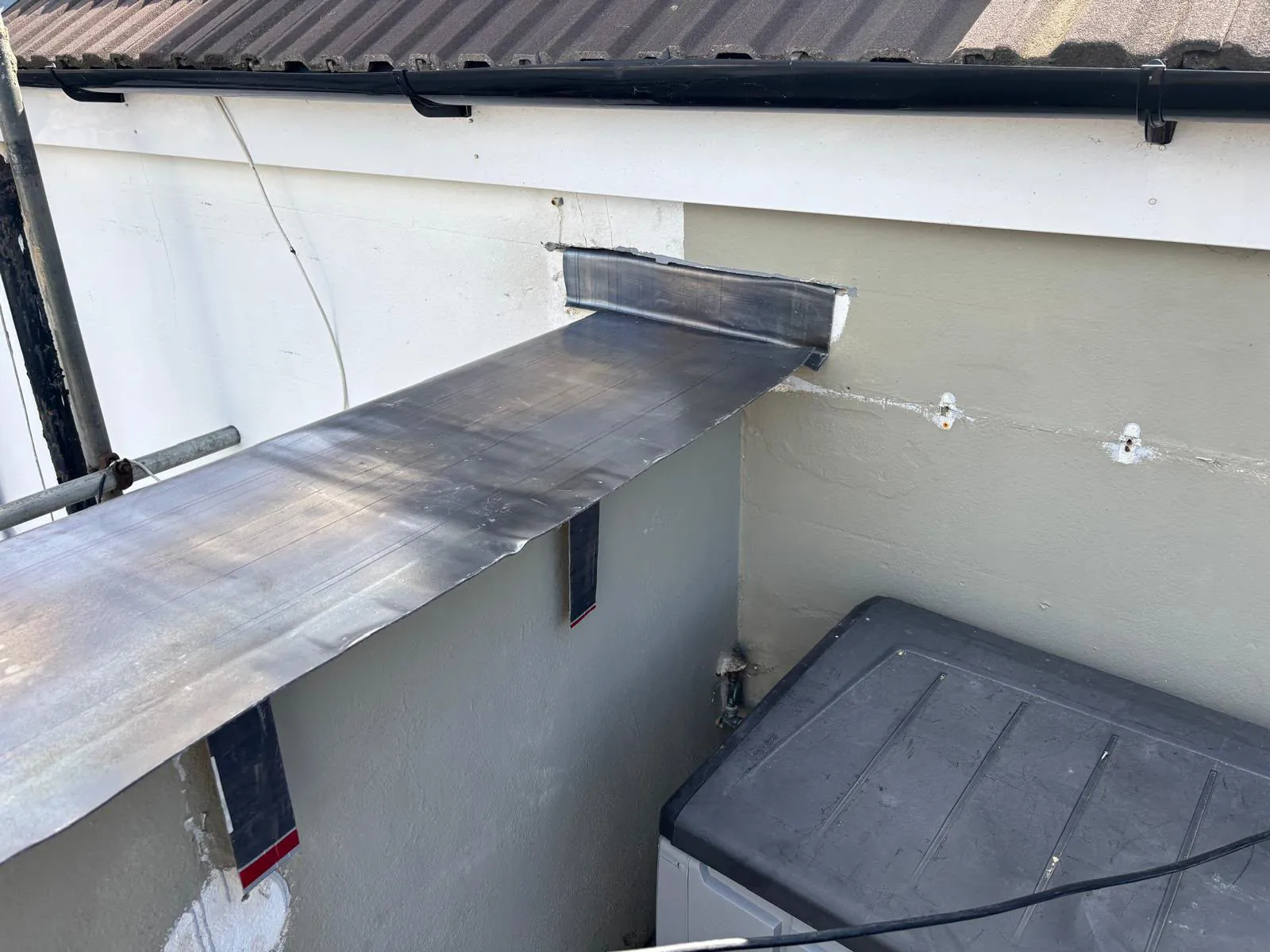
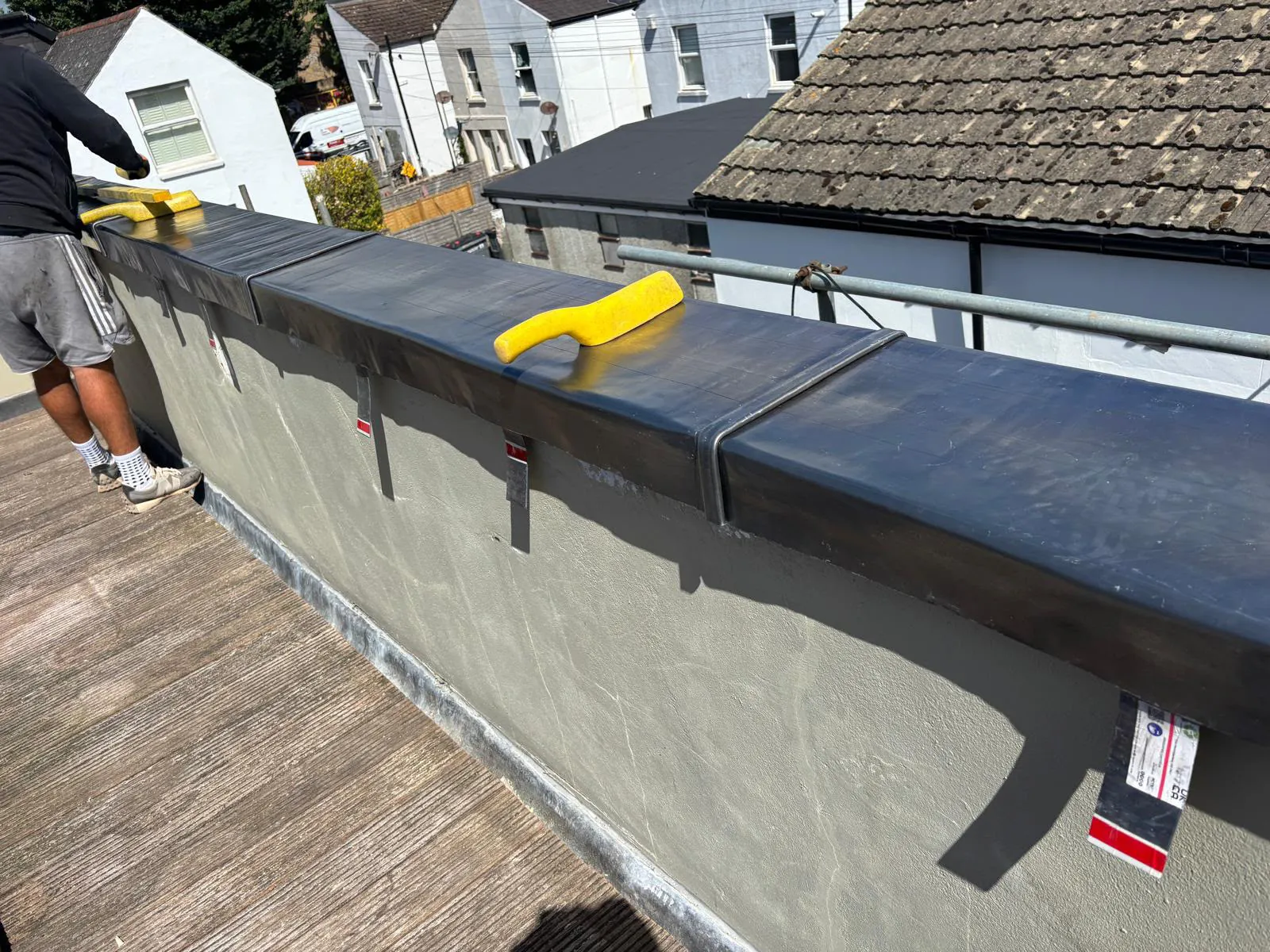
- Marine ply base. 18mm marine ply was fixed to the top of the wall to give the lead a solid, flat base.
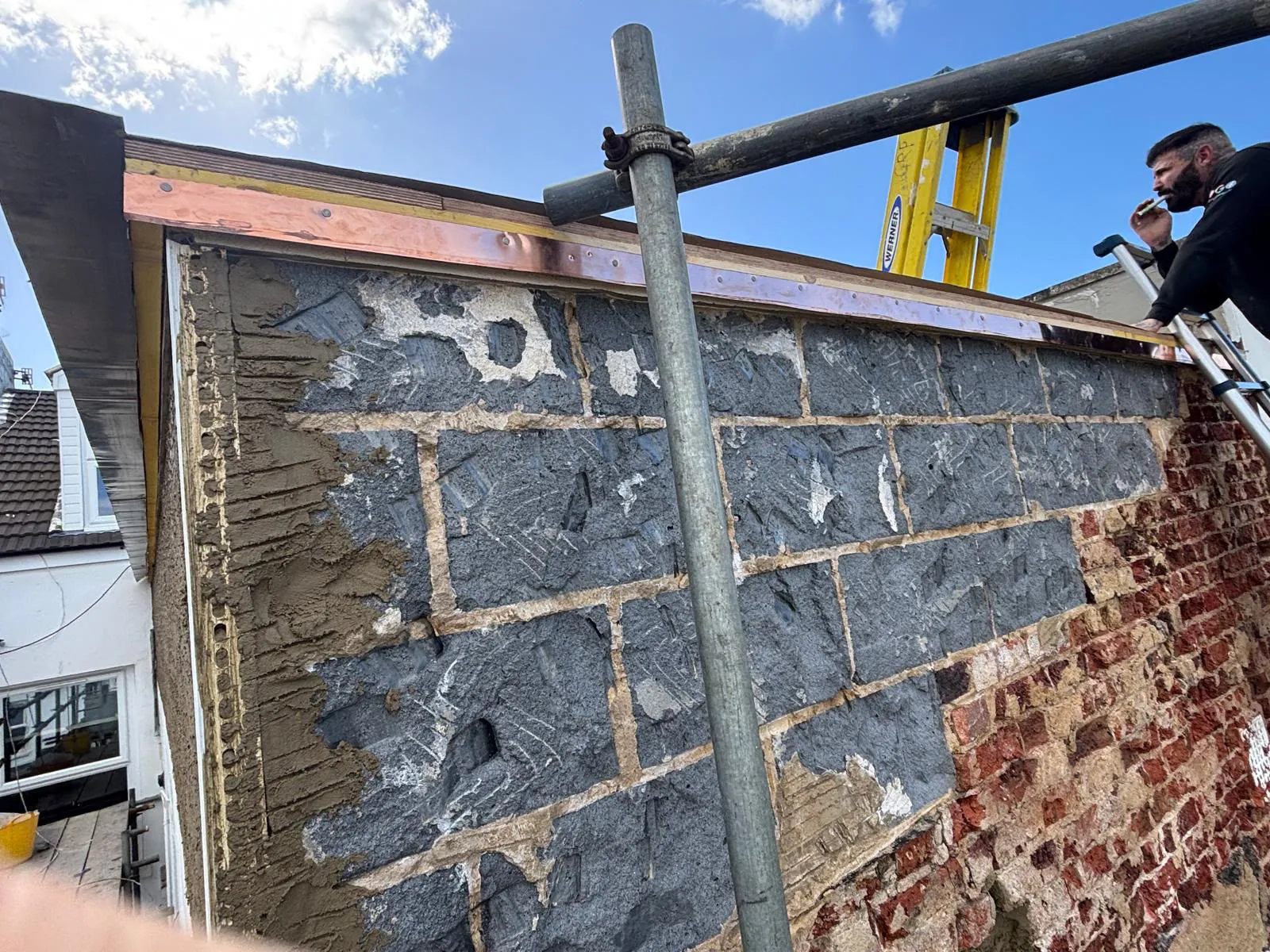
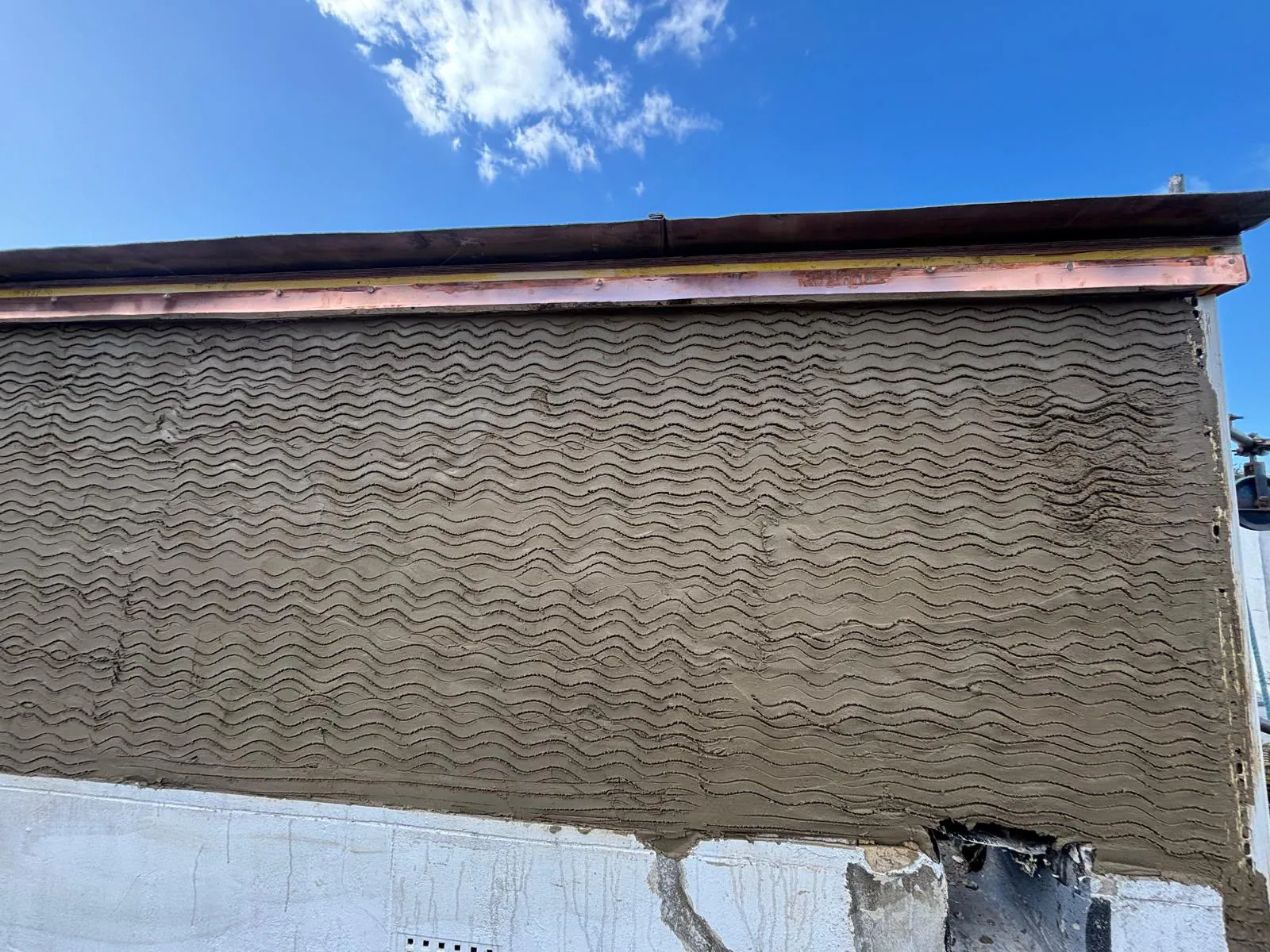
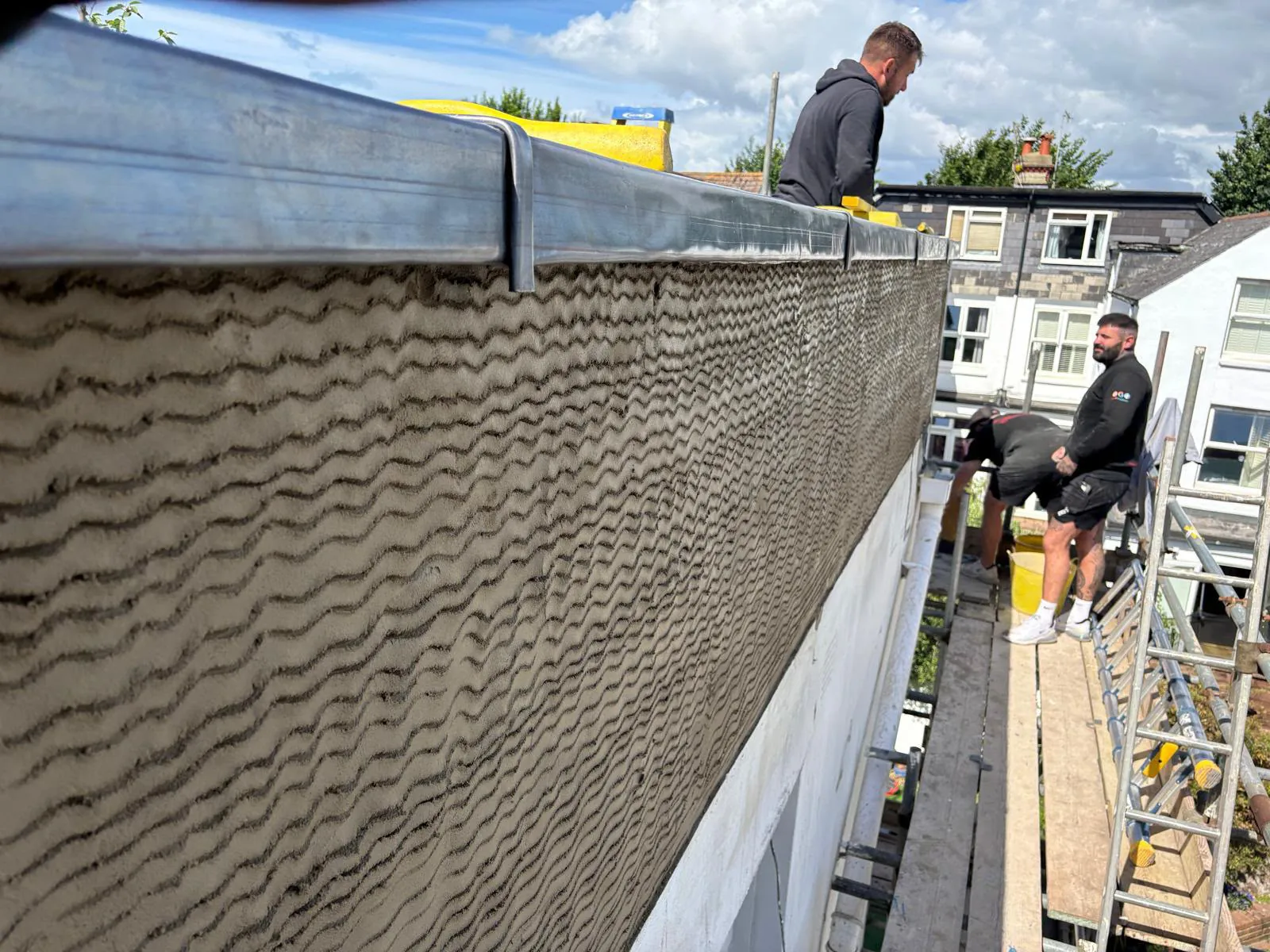
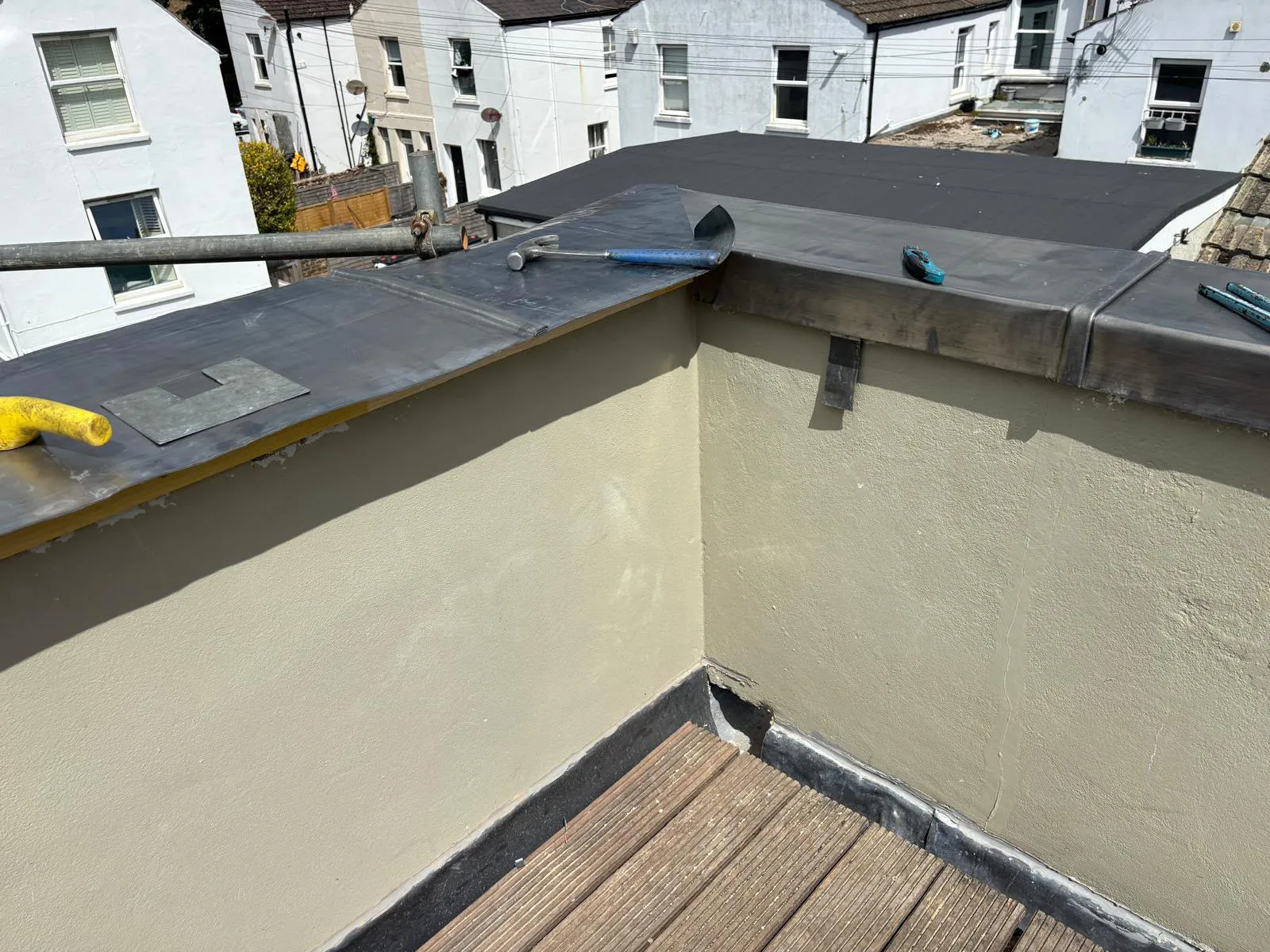
- Outer wall rendered. The outer face of the wall was rendered while it was exposed.
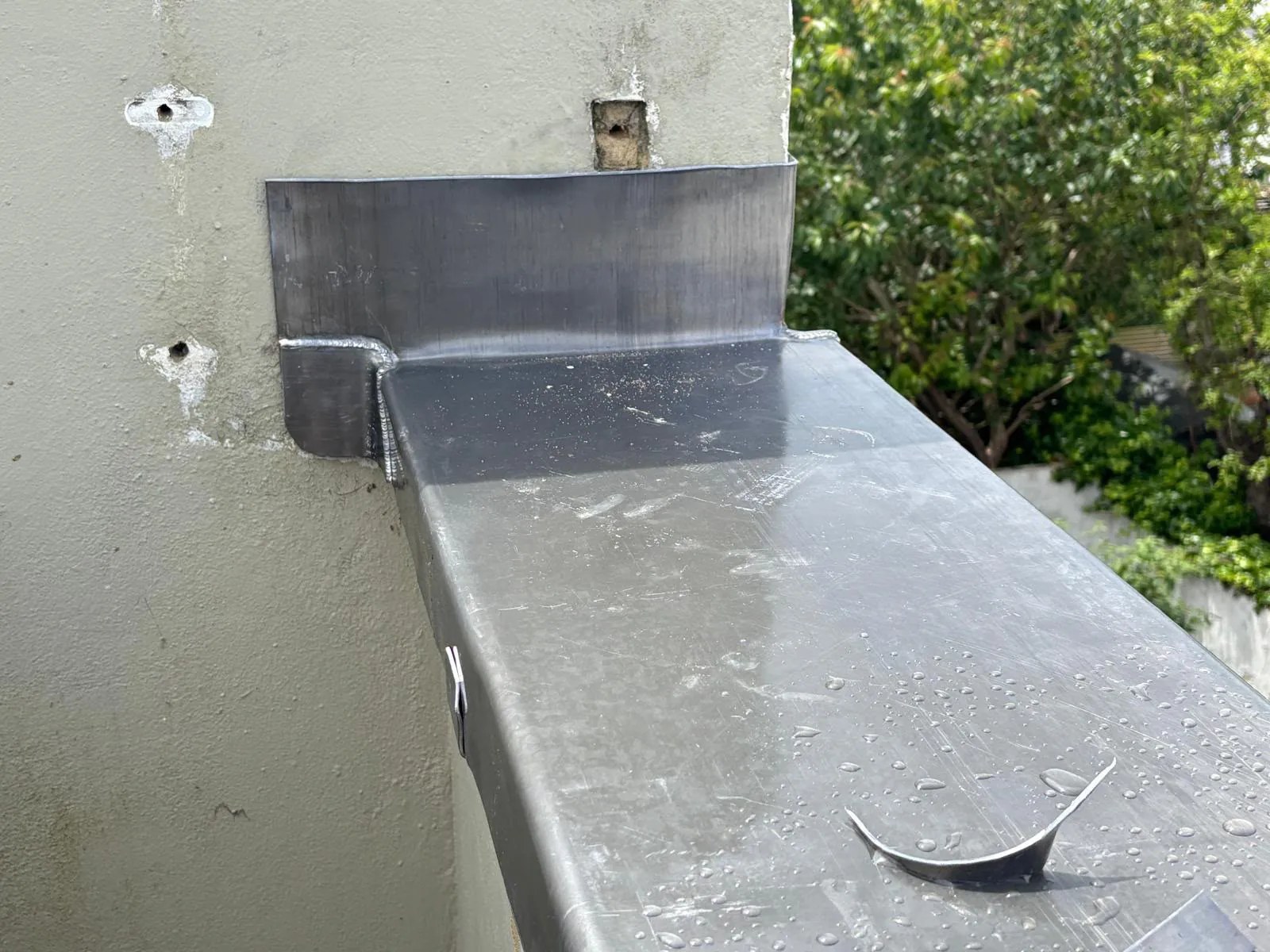
- Code 5 lead capping. The wall was capped in Code 5 lead, with every corner fully welded for a watertight finish and no joints for water to get through.
- Glass reinstalled. The glass balustrade was refitted to complete the job.
The Result
The balcony wall now has a durable, weatherproof lead capping built to last. With welded corners in place of mortar joints, there is no longer a weak point for water to find its way into the wall.
Project Gallery
Frequently Asked Questions
Coping stones are laid in sections with mortar joints between them. Those joints crack and open up over time with weathering and movement, and once they do, rain runs straight down into the wall beneath. Re-pointing the joints only fixes it until they crack again.
Lead capping covers the whole top of the wall in one continuous, weatherproof layer. With the corners welded rather than jointed, there are no gaps for water to get through, which removes the weak point that caused the original leak.
Lead sheet is graded by thickness using code numbers — the higher the code, the thicker the lead. Code 5 is a heavier-duty grade commonly used for cappings and cover flashings where the lead is exposed to the weather.
Lead needs a solid, even base to sit on. 18mm marine ply is made to resist moisture, so fixing it to the top of the wall gives the lead a flat, stable surface to be dressed over and fixed to.
Yes. On this job the glass was removed so the wall could be capped, then reinstalled once the leadwork was complete.
Need Similar Work?
We deliver the same quality and attention to detail on every project. Get in touch to discuss your requirements.