
Lead Soaker Flashing Replacement & Stormdry Treatment — Whitehawk, Brighton
Failing flashings against an adjoining wall stripped out and replaced with individual lead soakers on a Whitehawk, Brighton property — adjoining wall sealed with Stormdry to finish.
Project Details
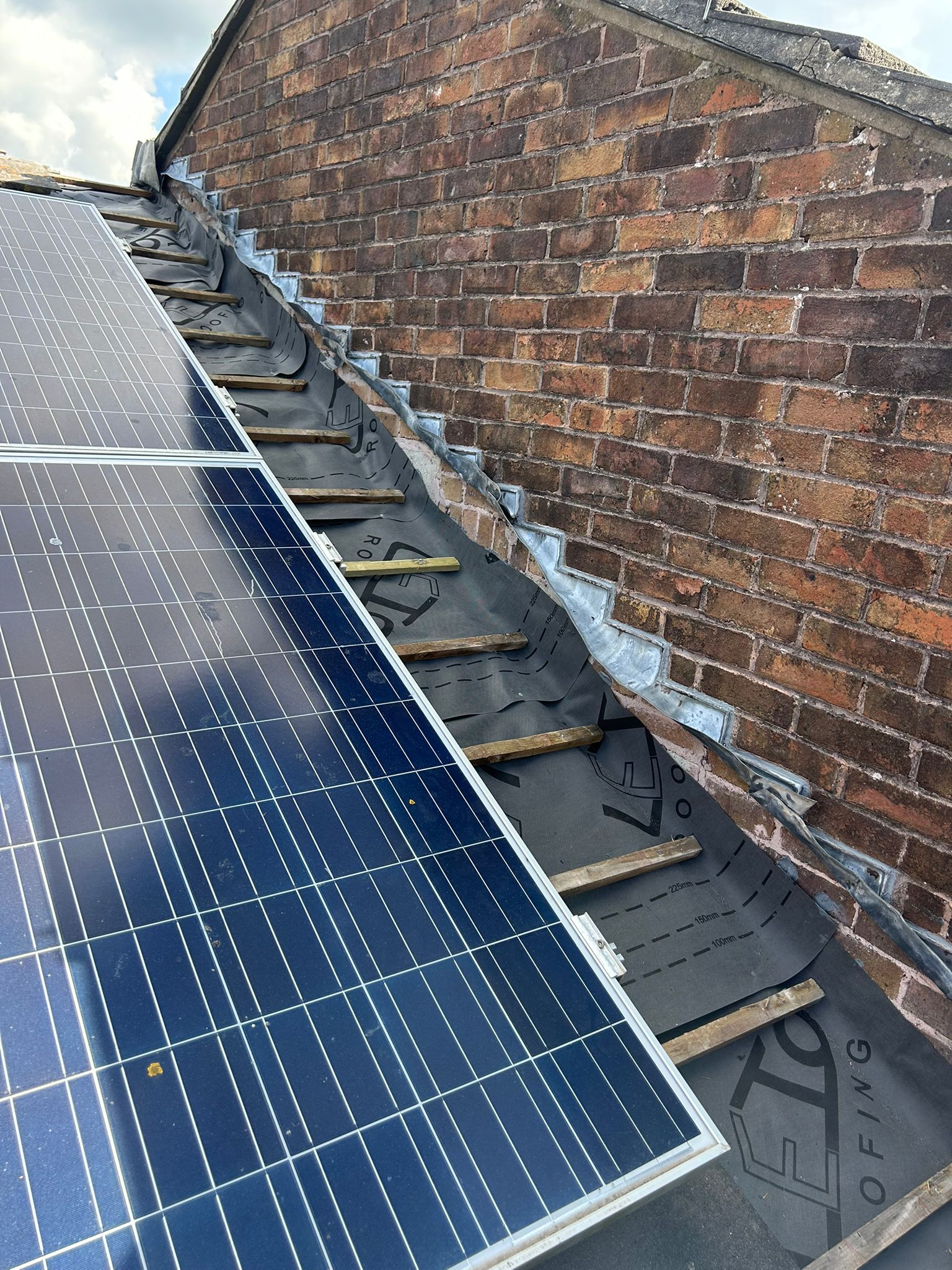
On this Whitehawk property the flashings running against the adjoining wall had stopped doing their job. Water was getting in at the roof-to-wall junction, and the existing leadwork was no longer providing a reliable seal. The solution was to strip everything out and start again with the correct method — individual lead soakers fitted course by course, with the adjoining wall treated with Stormdry to close off the brickwork above.
The Problem
Flashings against adjoining walls on semi-detached and terraced properties are a common source of water ingress. Where the original installation used a single continuous piece of lead or an inadequate sealant-only solution, thermal movement and weathering cause the junction to open up over time. On this Whitehawk property, the flashings had failed entirely and were no longer preventing water from tracking in between the roof and the wall.
The Work
The job was completed in two stages:
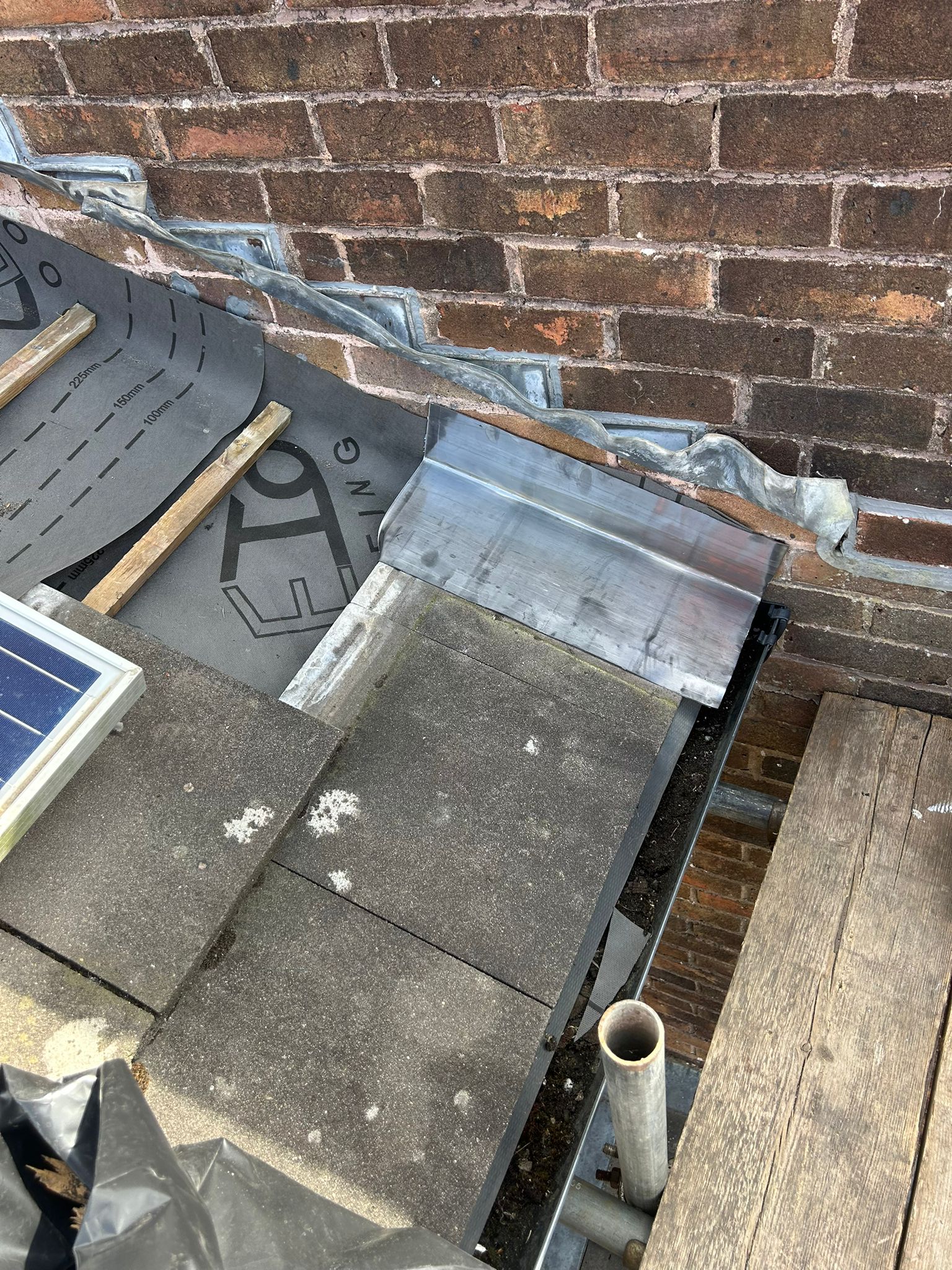
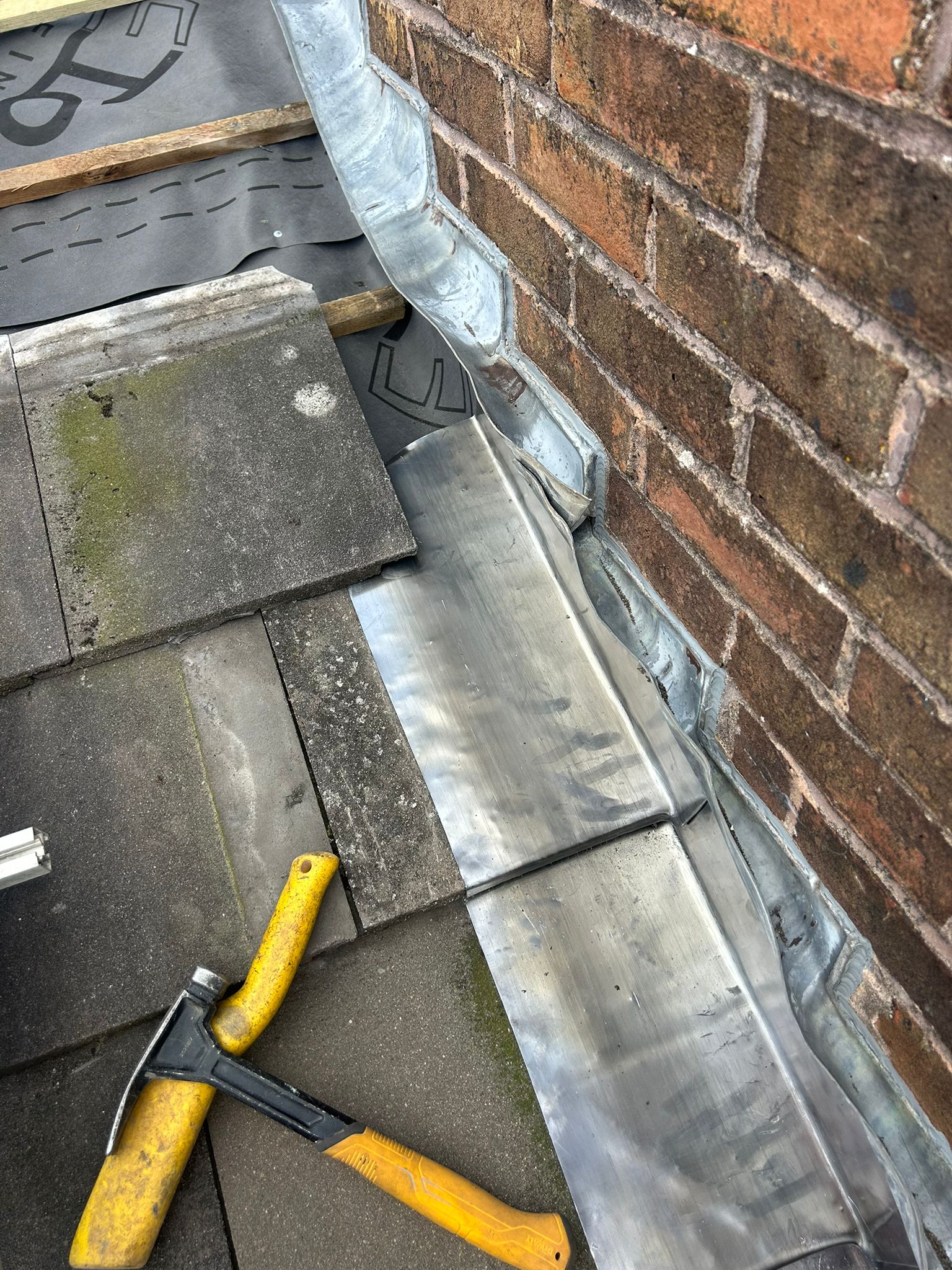
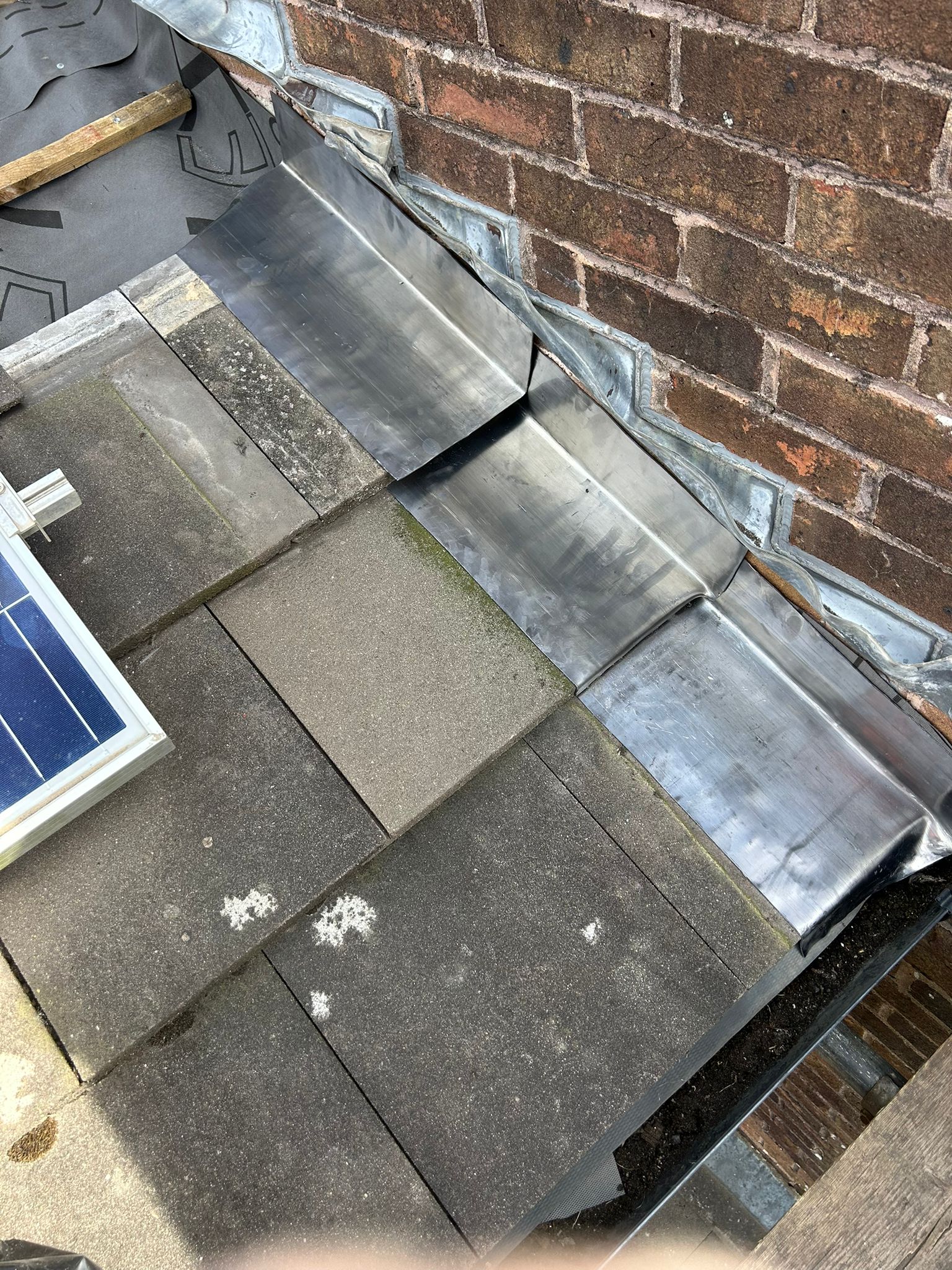
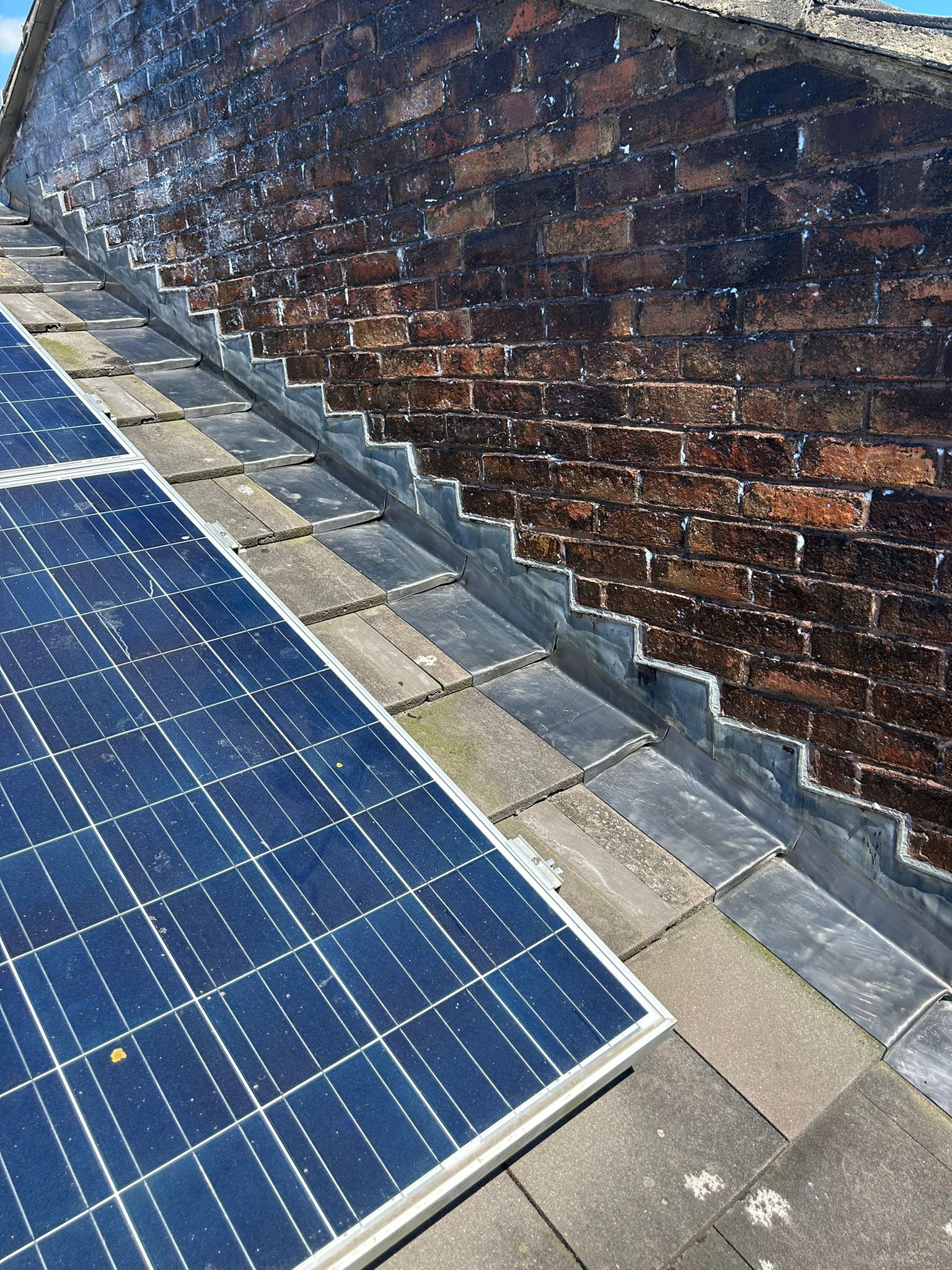
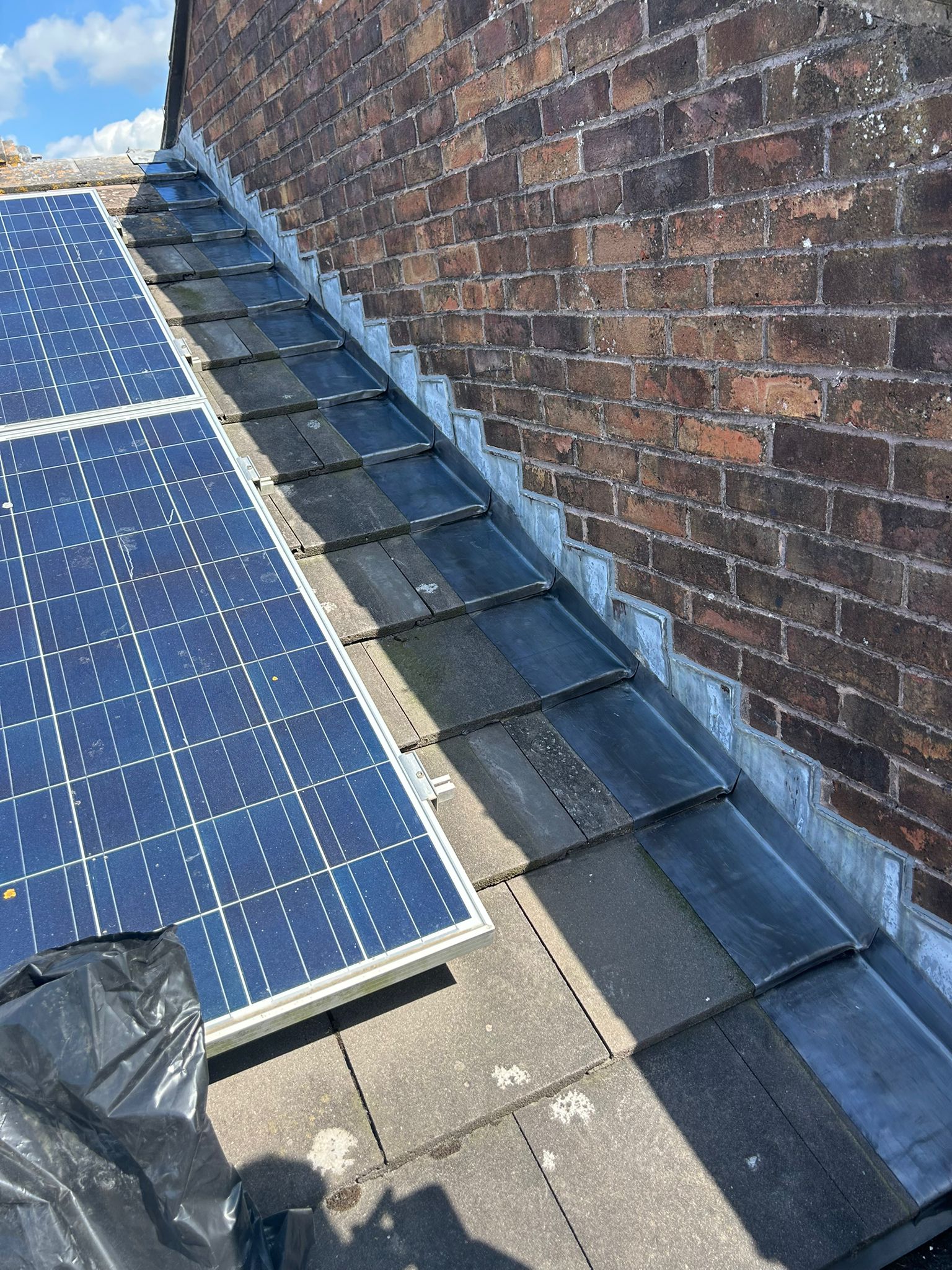
- Lead soaker installation. The existing flashings were stripped out completely. Individual lead soakers were then cut and fitted between each course of tiles up the full length of the abutment, with each soaker dressed up against the adjoining wall face. This method creates a step-by-step weathertight barrier that moves with the roof without cracking or pulling away.
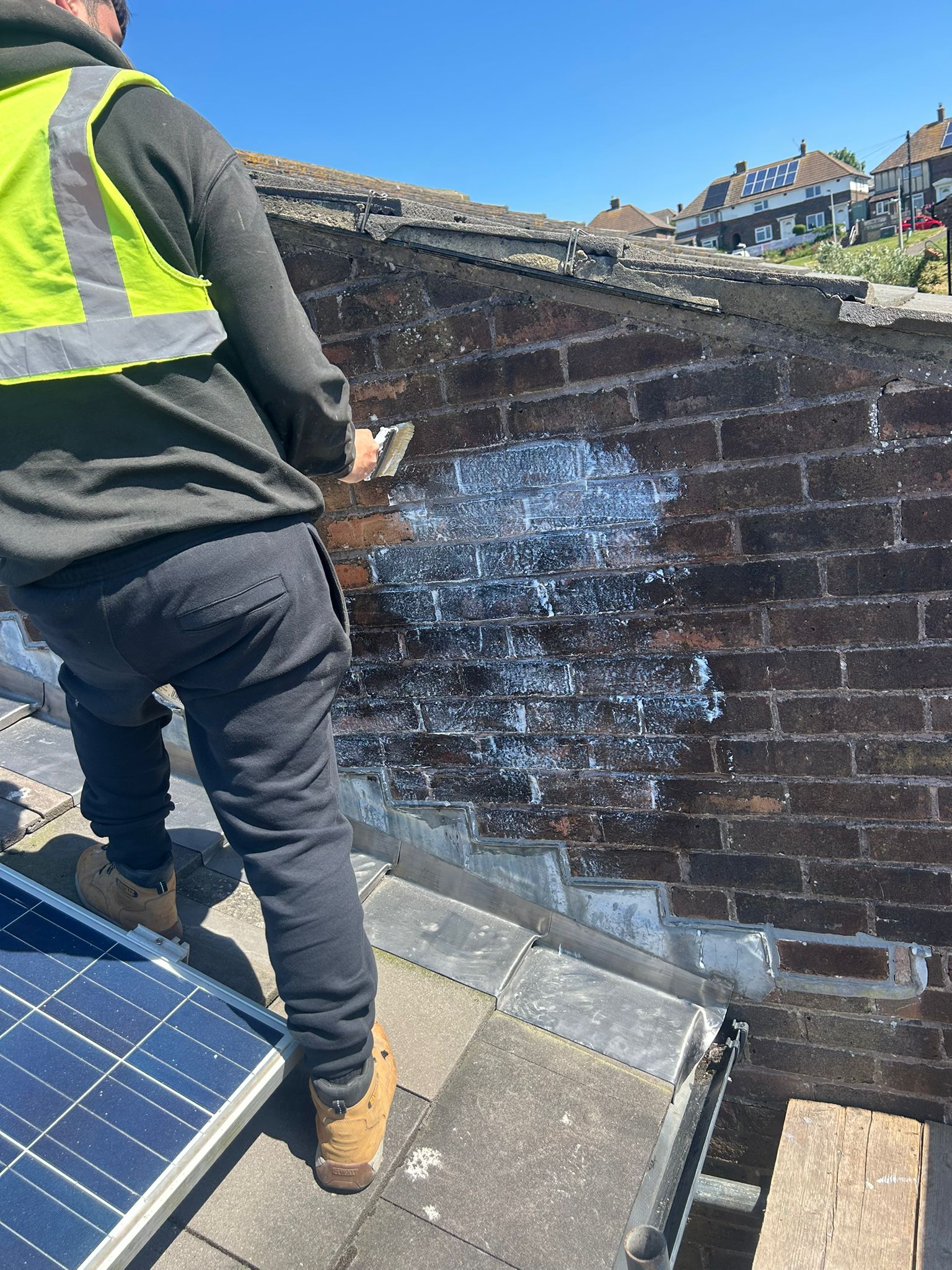
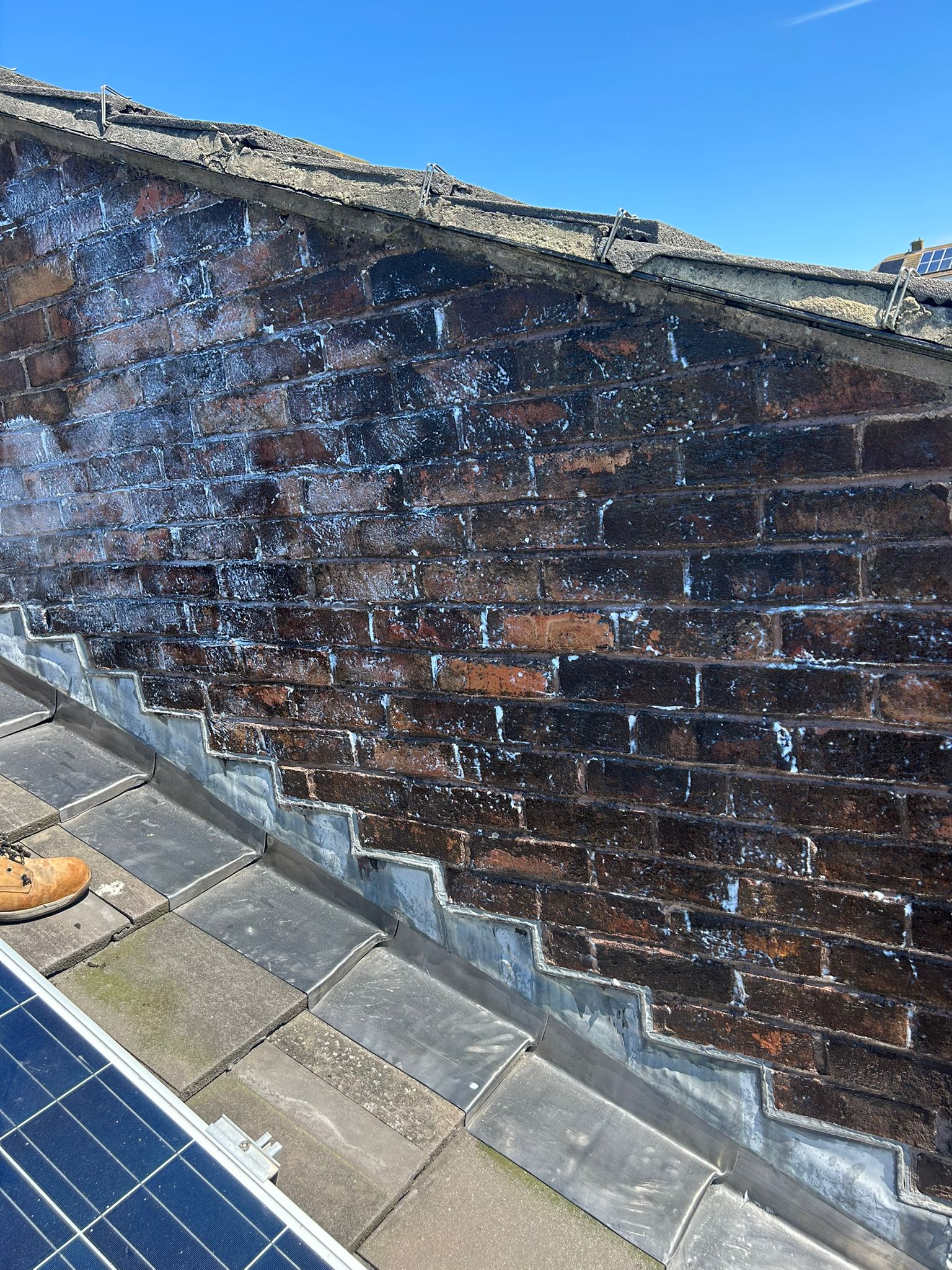
- Stormdry treatment. Once the leadwork was complete, Stormdry masonry protection cream was applied to the full face of the adjoining brick wall above the flashings. This breathable water-repellent treatment penetrates the brickwork and significantly reduces water absorption from driving rain — giving the wall the same protection as the roof below it.
The Result
The roof-to-wall junction is now fully weathertight. The individual soaker method is the correct approach for this type of abutment and will outlast any continuous strip or sealant repair by many years. Combined with the Stormdry treatment on the adjoining wall, the whole junction is now protected against water ingress from both directions.
Project Gallery
Frequently Asked Questions
A soaker is an individual piece of lead that slots between each course of tiles and turns up against the adjoining wall. A cover flashing is then dressed over the top into a mortar joint to cap it off. Together they create a two-part weathertight system. A single continuous flashing without soakers relies on a perfect seal along its full length — when that seal breaks anywhere, water gets in. Soakers work independently at each course, so a failure at one point does not compromise the whole run.
The main causes are thermal movement — lead expands and contracts with temperature, and continuous strips can crack or pull away from the wall over time — and inadequate original installation, where sealant or mortar was used instead of properly fitted lead. On older properties, flashings may also simply have reached the end of their service life and corroded through.
Stormdry is a breathable masonry protection cream that penetrates into the surface of the brickwork and bonds within the pores, dramatically reducing water absorption without coating or sealing the surface. It does not significantly alter the appearance of the brickwork and allows moisture vapour to escape from within the wall. It carries BBA certification and is widely specified for older masonry in exposed positions.
Yes — the solar panels on this property were carefully worked around during the flashing strip-out and reinstated once the leadwork was complete. Access to the abutment between the panels and the wall requires care, but it does not prevent the correct installation method from being used.
Need Similar Work?
We deliver the same quality and attention to detail on every project. Get in touch to discuss your requirements.