
Full Slate Roof Replacement, Leadwork Renewal & Chimney Abutment Restoration – Complete Pitched Roof Refurbishment in Brighton
Full slate roof replacement, leadwork renewal and chimney abutment restoration on a large pitched roof — complete refurbishment by Kirby's BPM.
Project Details
The Problem
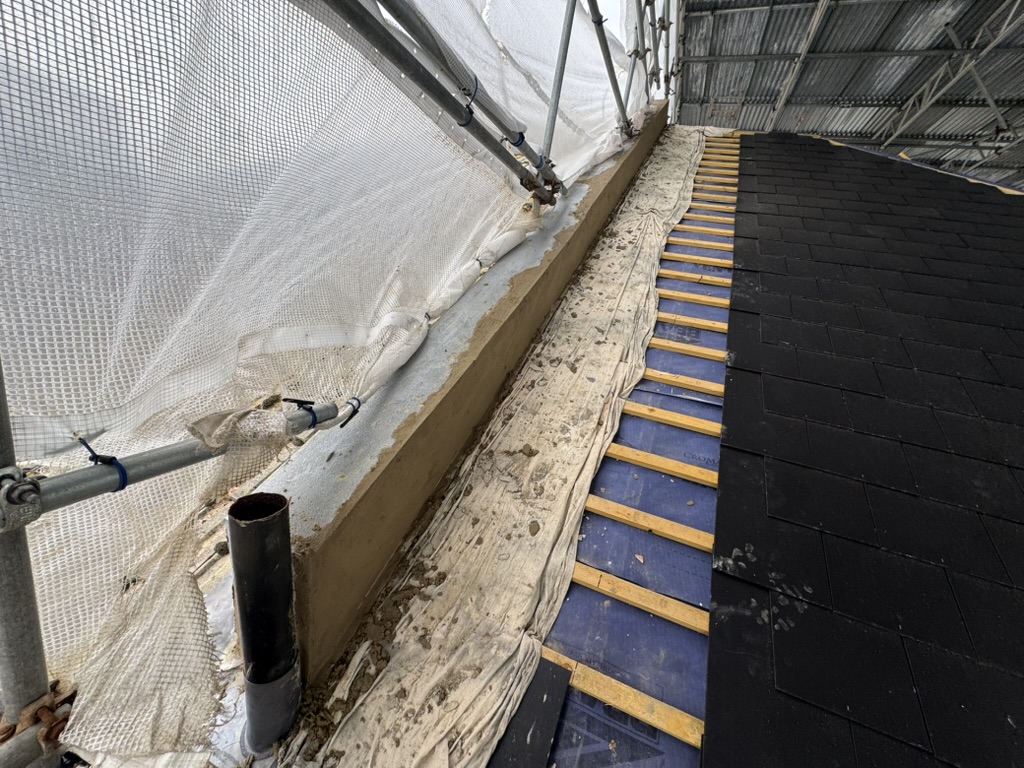
This large pitched roof had extensive age-related deterioration across multiple elements: failing slates, perished underlay, defective chimney abutment detailing and failing mortar around the chimney bases and parapet wall. The slates, underlay and flashings had reached the end of their service life and water ingress had taken hold in several places.
The Work
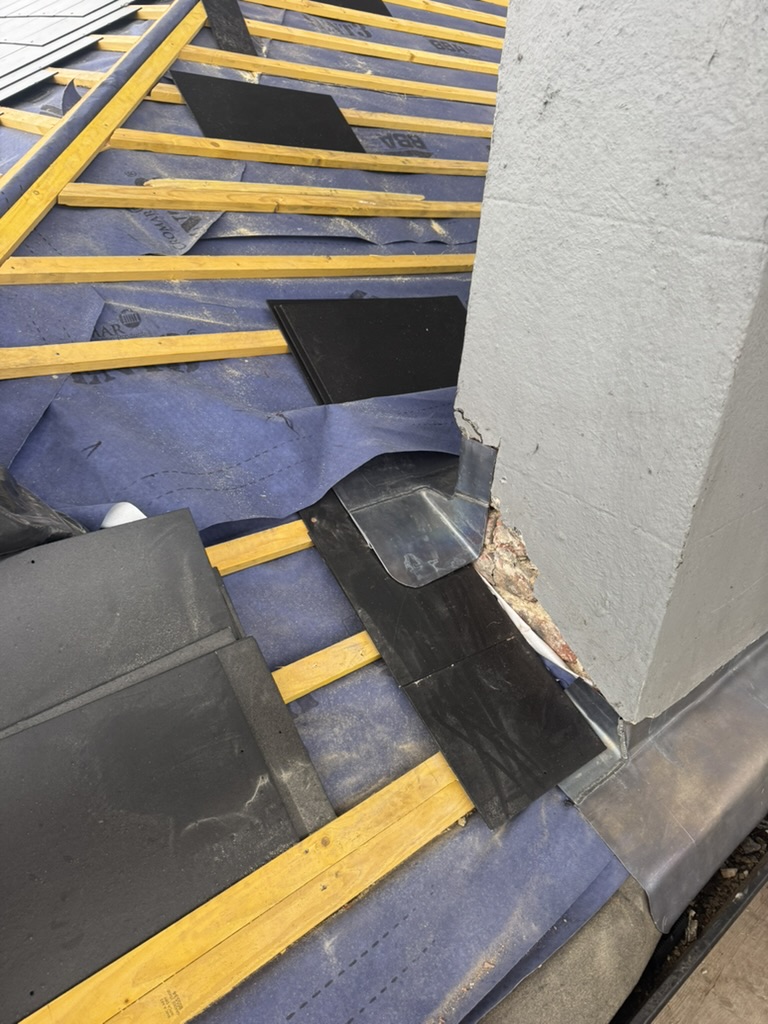
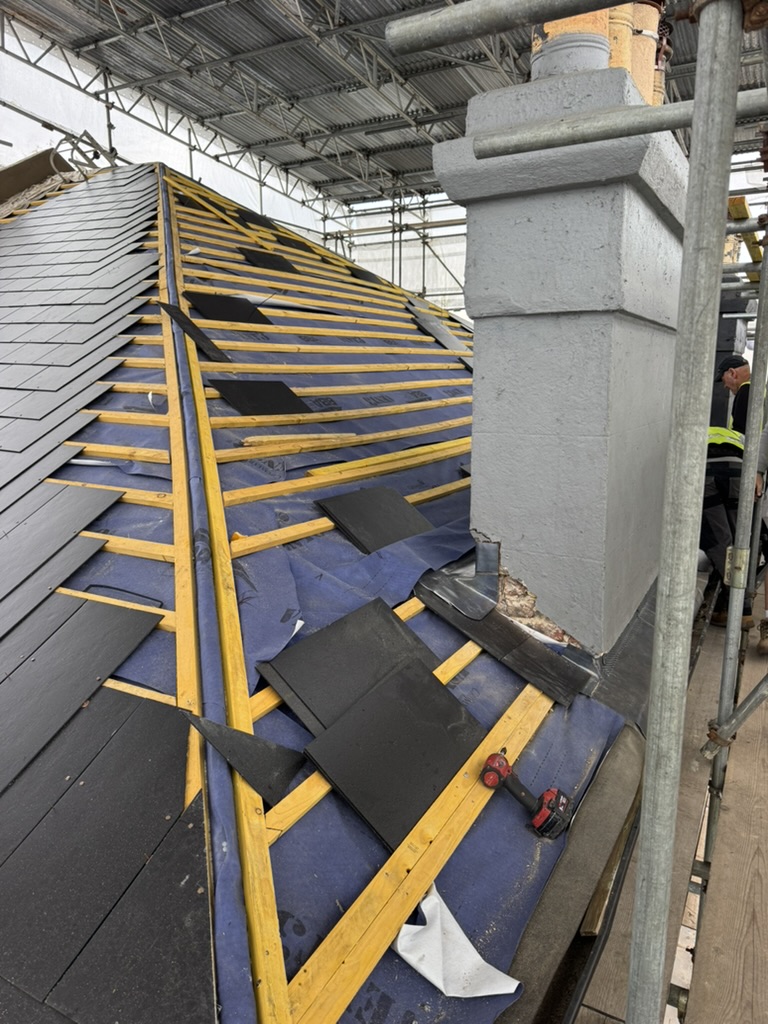
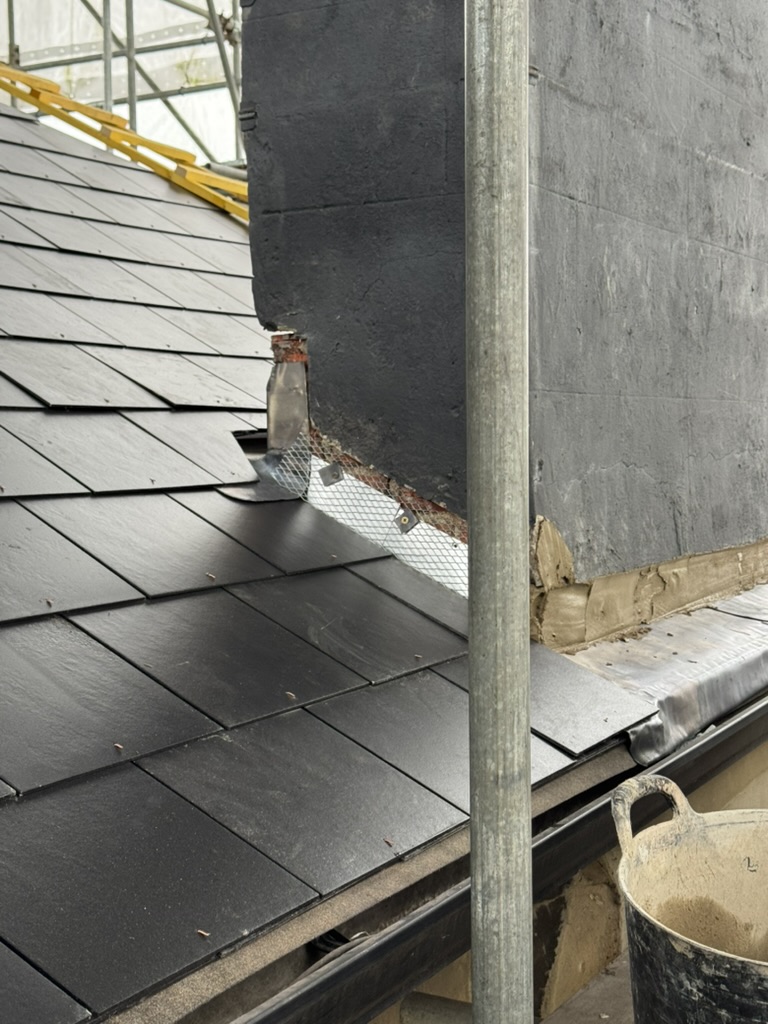
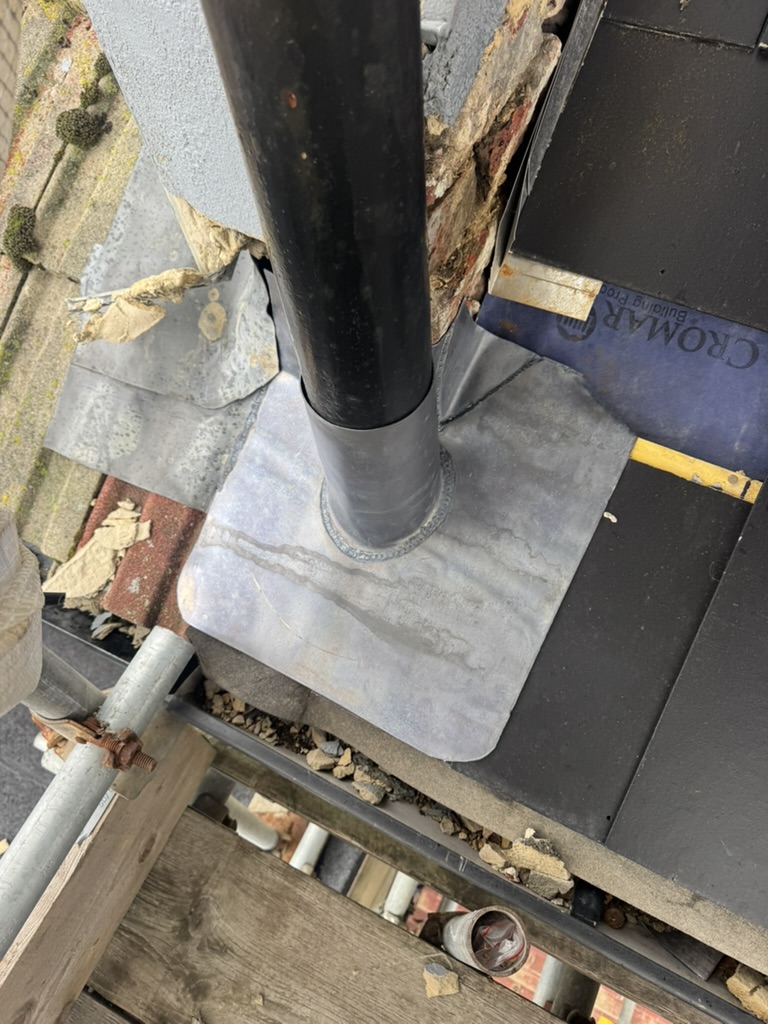
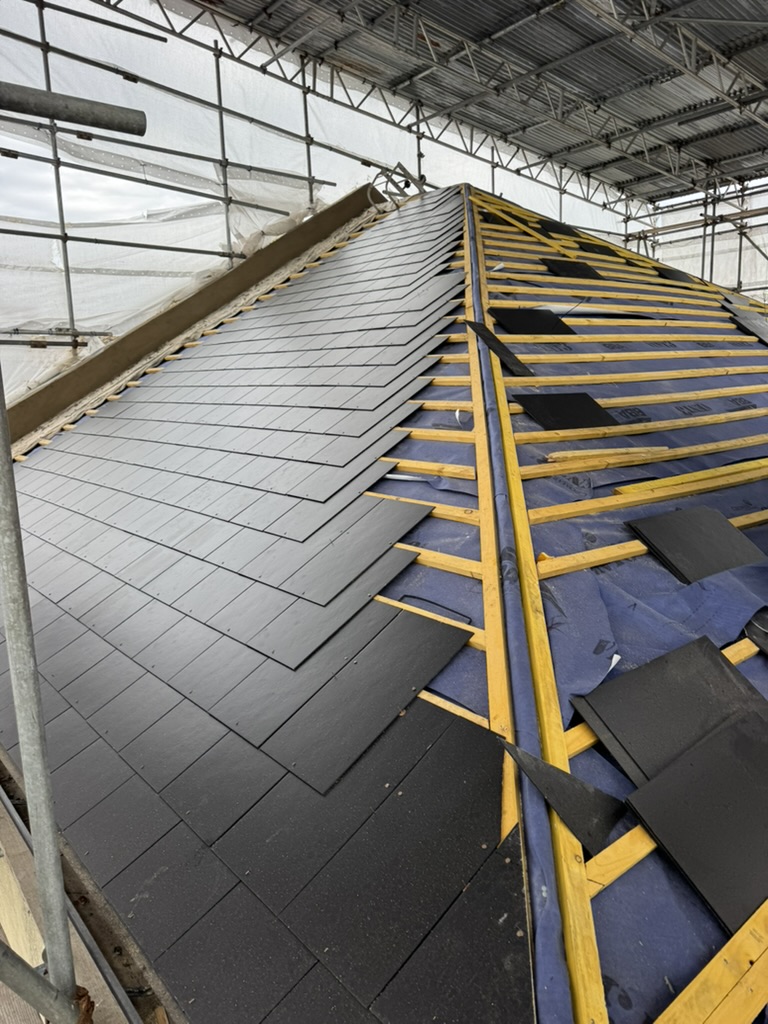
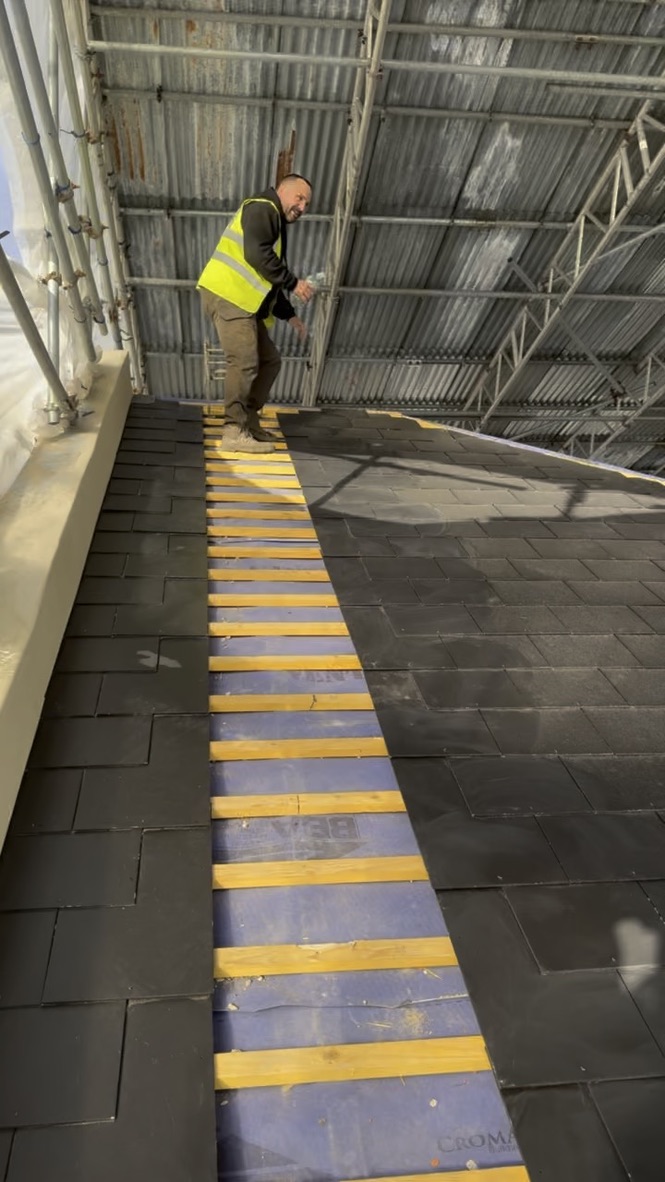
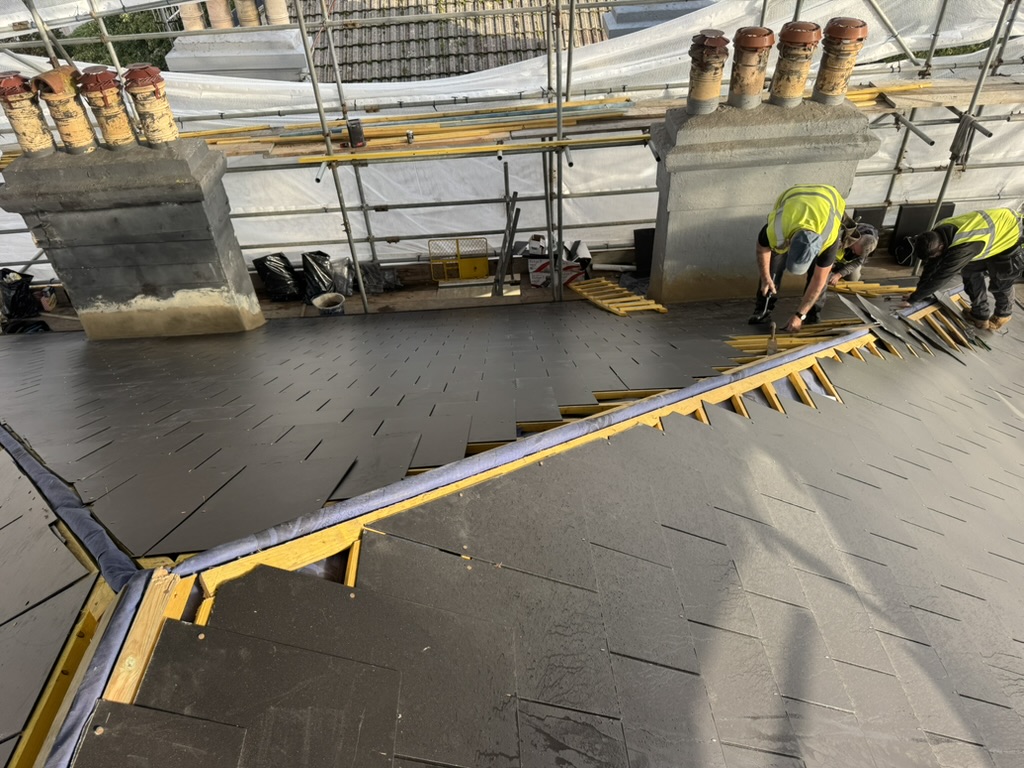
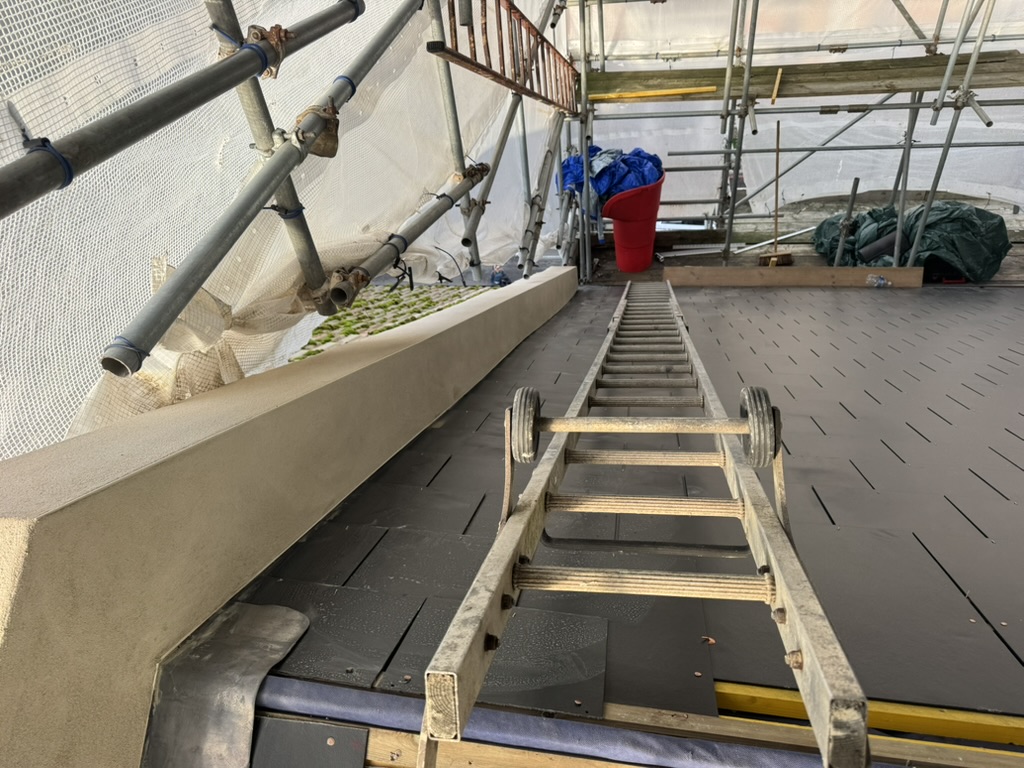
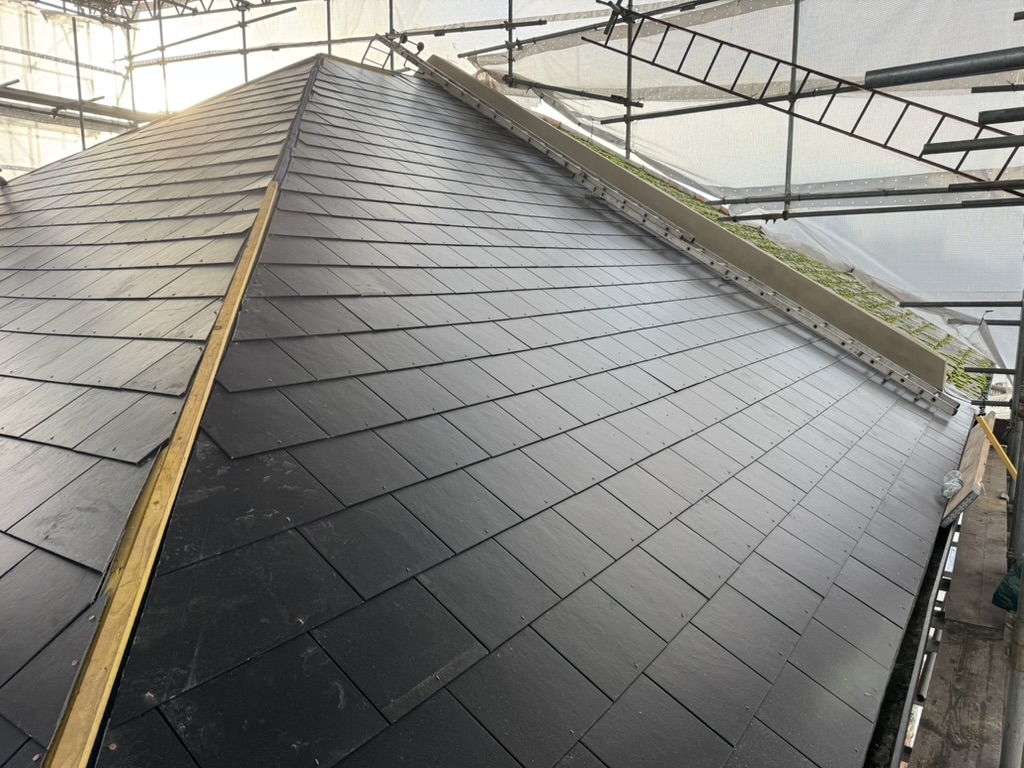
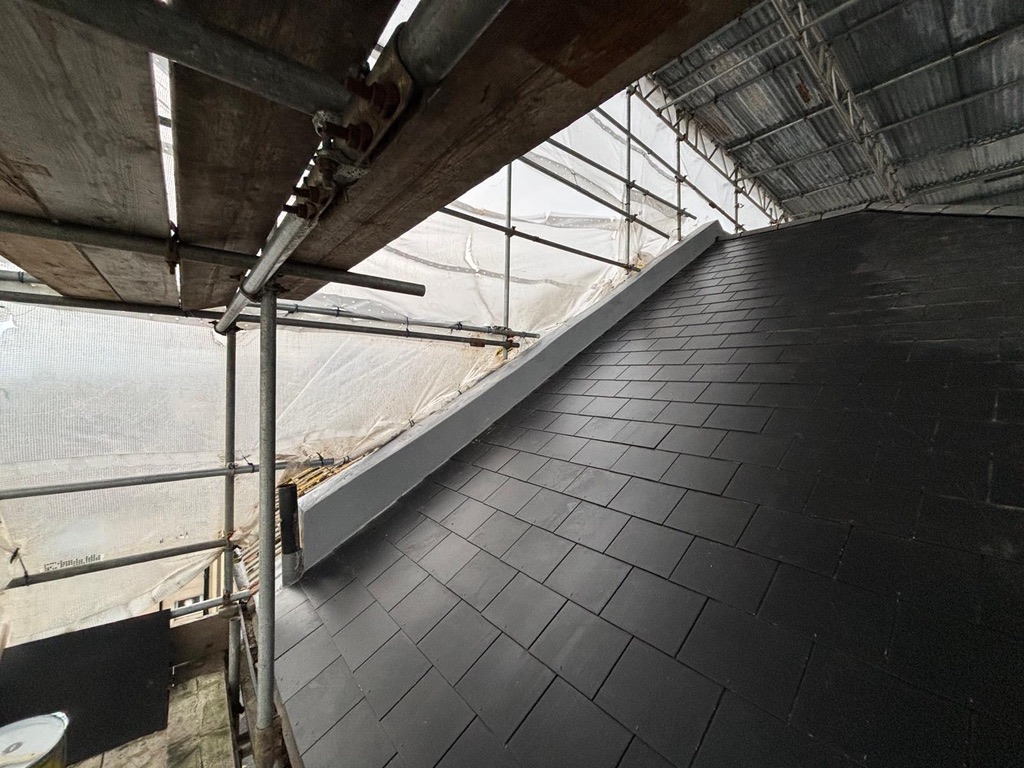
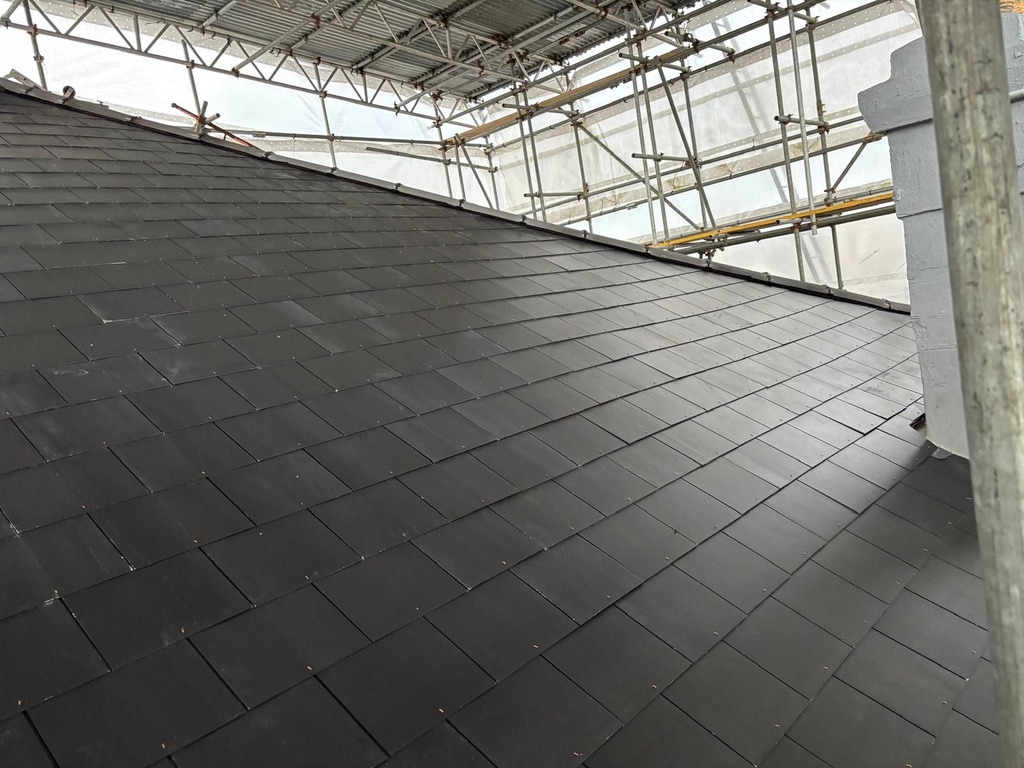
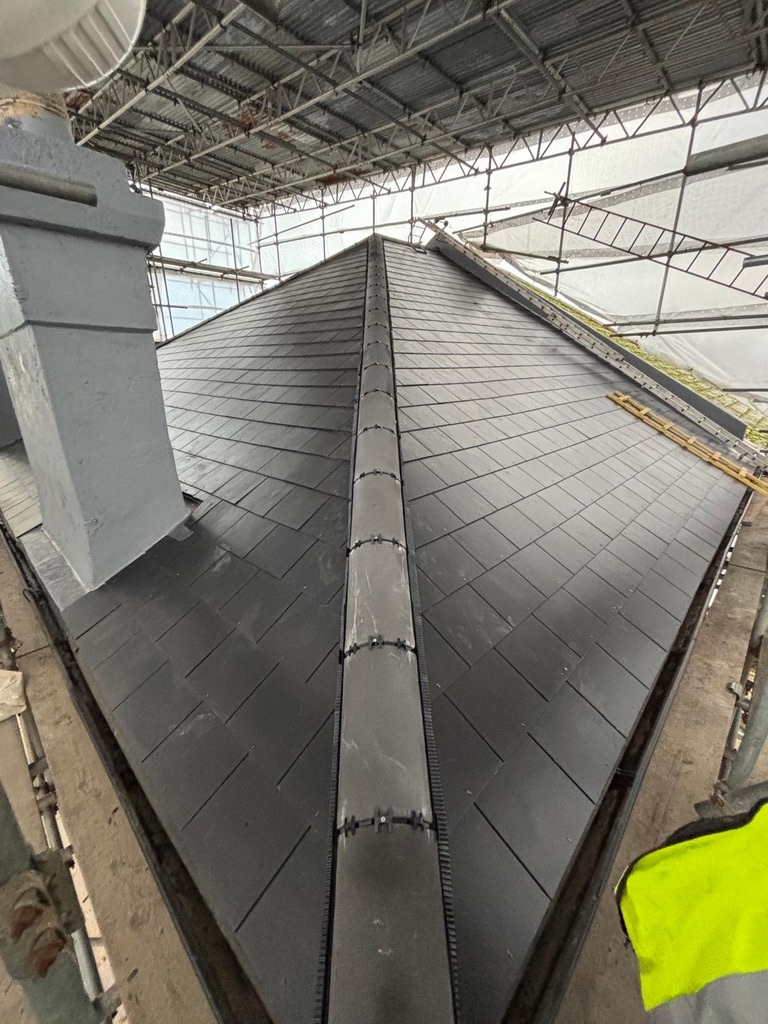
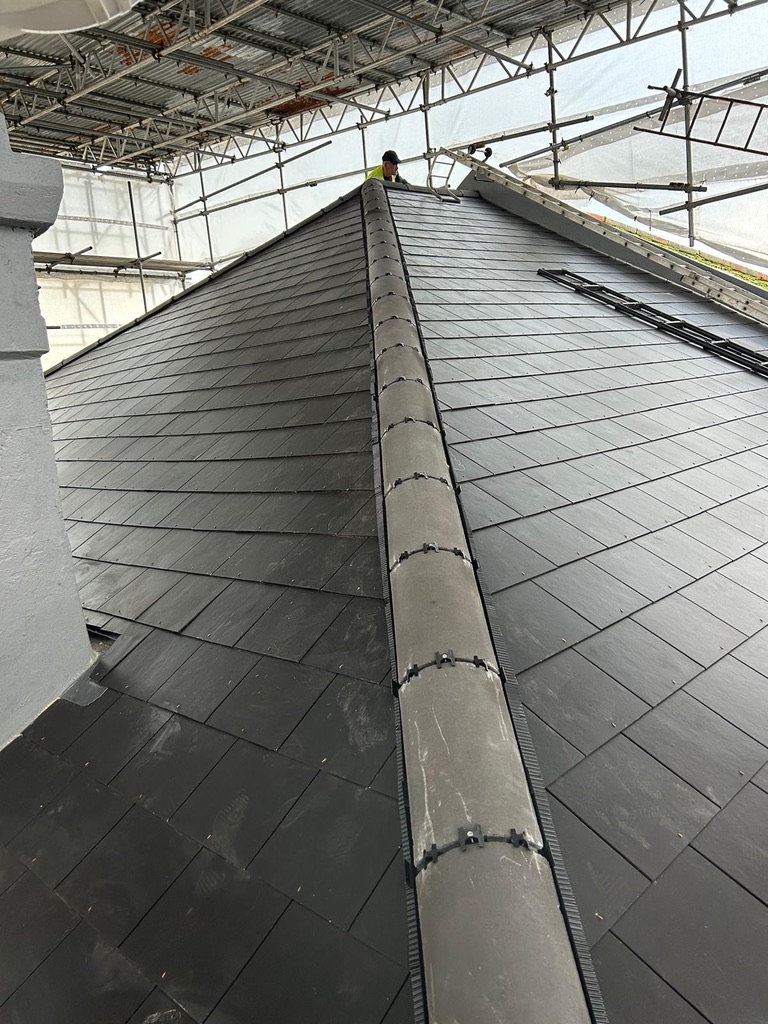
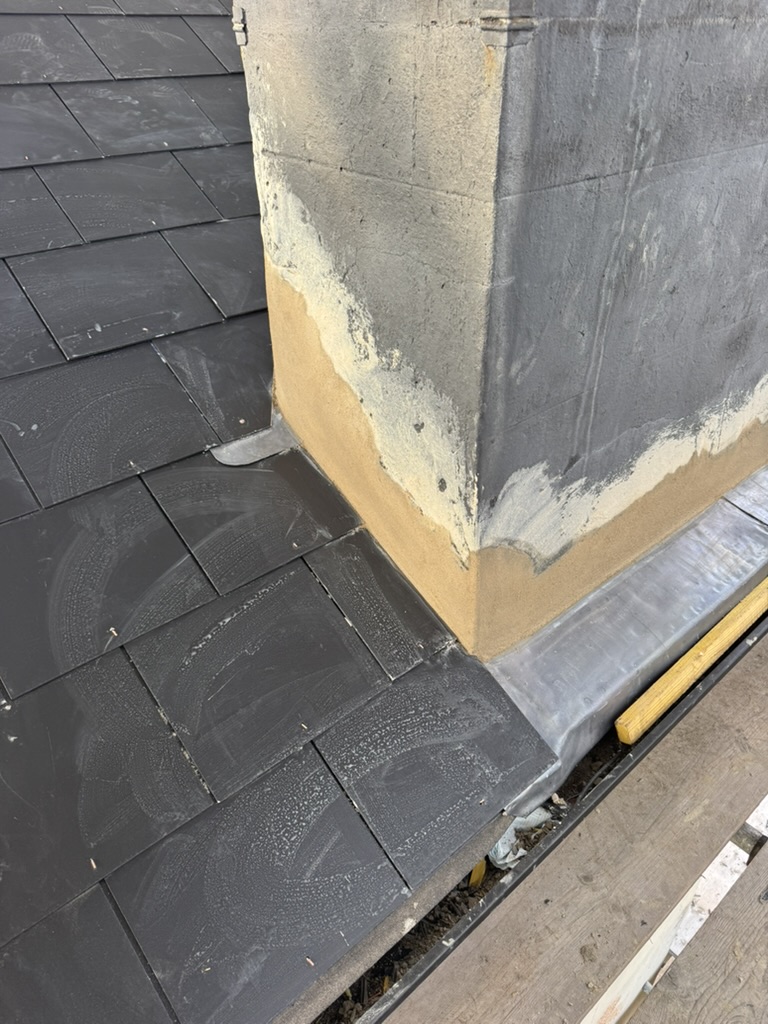
The entire roof covering was stripped back to the rafters. A high-performance breathable membrane and new BS-graded treated battens were installed, followed by full re-slating using premium slates with stainless steel fixings. All hips, valleys and junctions were aligned for a clean, uniform finish. Chimney and abutment restoration included removing all defective render and loose masonry, rebuilding damaged sections, and fitting new lead trays, step flashings, aprons and soakers to LSA standards. Pipe penetrations were upgraded with hand-crafted lead slates, the parapet wall was re-rendered and capped, and a dry ridge system was installed for ventilation and storm resistance. All work was carried out under a temporary scaffold roof keeping the property protected throughout.
The Result
A structurally sound, fully waterproofed roof system with correctly detailed leadwork at every junction. Durability, weather resistance and overall appearance are all significantly improved — and with stainless fixings and a dry ridge, future maintenance requirements are minimal.
Project Gallery
Frequently Asked Questions
A dry ridge system uses mechanically fixed ridge tiles with a ventilated underlay strip instead of traditional mortar bedding. Mortar cracks over time through thermal movement and needs periodic re-bedding. A dry ridge is maintenance-free, improves roof ventilation, and is more resistant to storm uplift — which is why it is now the preferred method under current roofing practice.
Lead soakers are small individual pieces of lead that interleave between slates or tiles at an abutment or alongside a chimney. They work together with step flashings to create a fully weathertight junction by preventing water from tracking sideways under the tiles. Without properly formed soakers, step flashings alone cannot keep water out.
A temporary weathering roof is a protective structure erected over the scaffold that covers the entire building while the roof is stripped. It allows work to continue in wet weather without exposing the interior, and means the occupants can remain in the property throughout. For large or complex roofs, this is standard practice.
A correctly installed natural slate roof with properly detailed leadwork should last 50–100 years. The limiting factors are typically the flashings, fixings and battens rather than the slates themselves. Using stainless steel fixings and treated battens from the outset significantly extends the service life of the entire roof system.
Need Similar Work?
We deliver the same quality and attention to detail on every project. Get in touch to discuss your requirements.