
Chimney Restoration — Repointing, Lead Flashings & Stormdry, Portslade
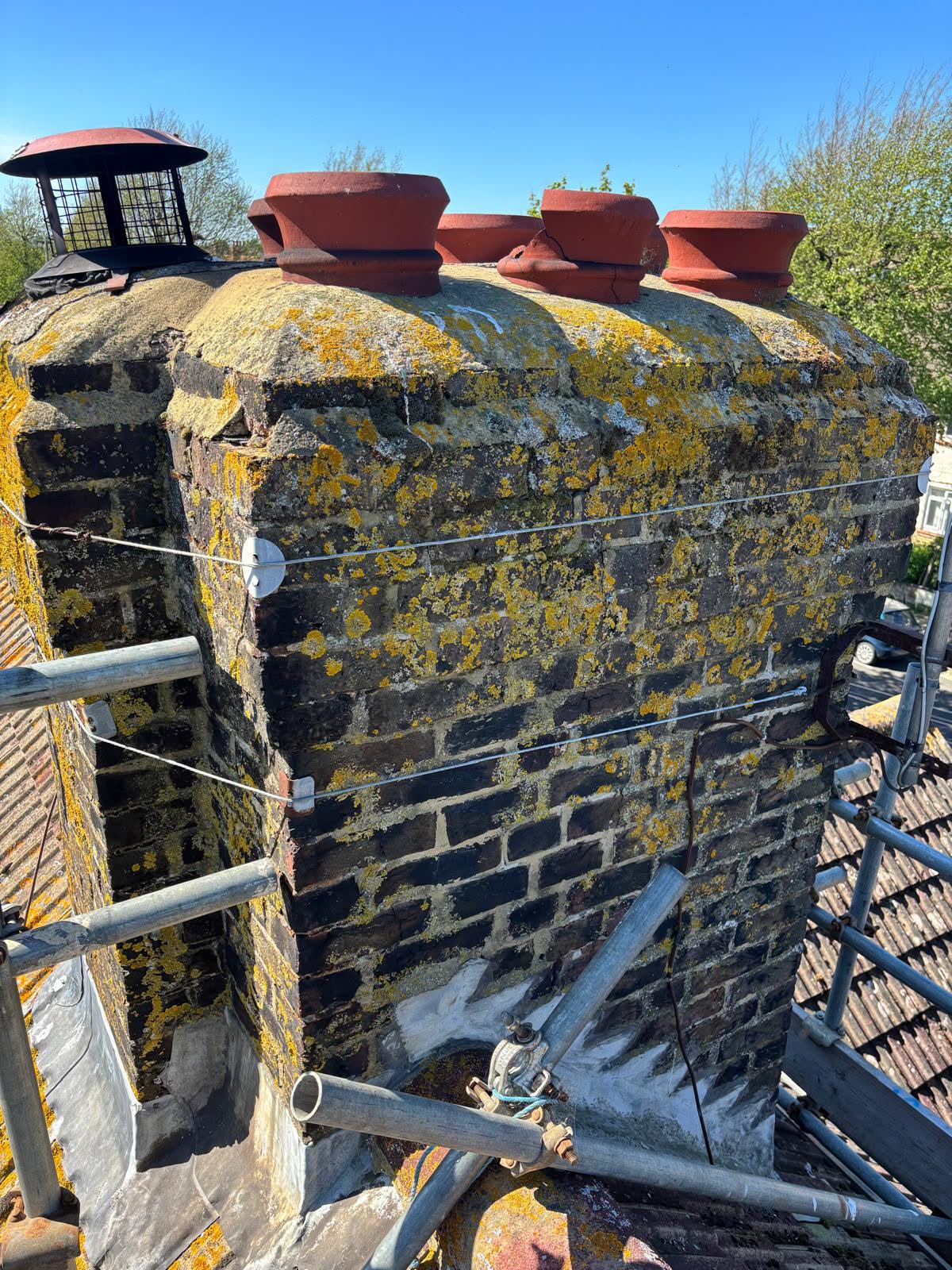
Full chimney restoration in Portslade — completely ground out and repointed, all flashings stripped and replaced with new Code 4 lead, aquapol sealant to the top, three flue ventilators fitted and Stormdry protection cream applied to finish.
Project Details
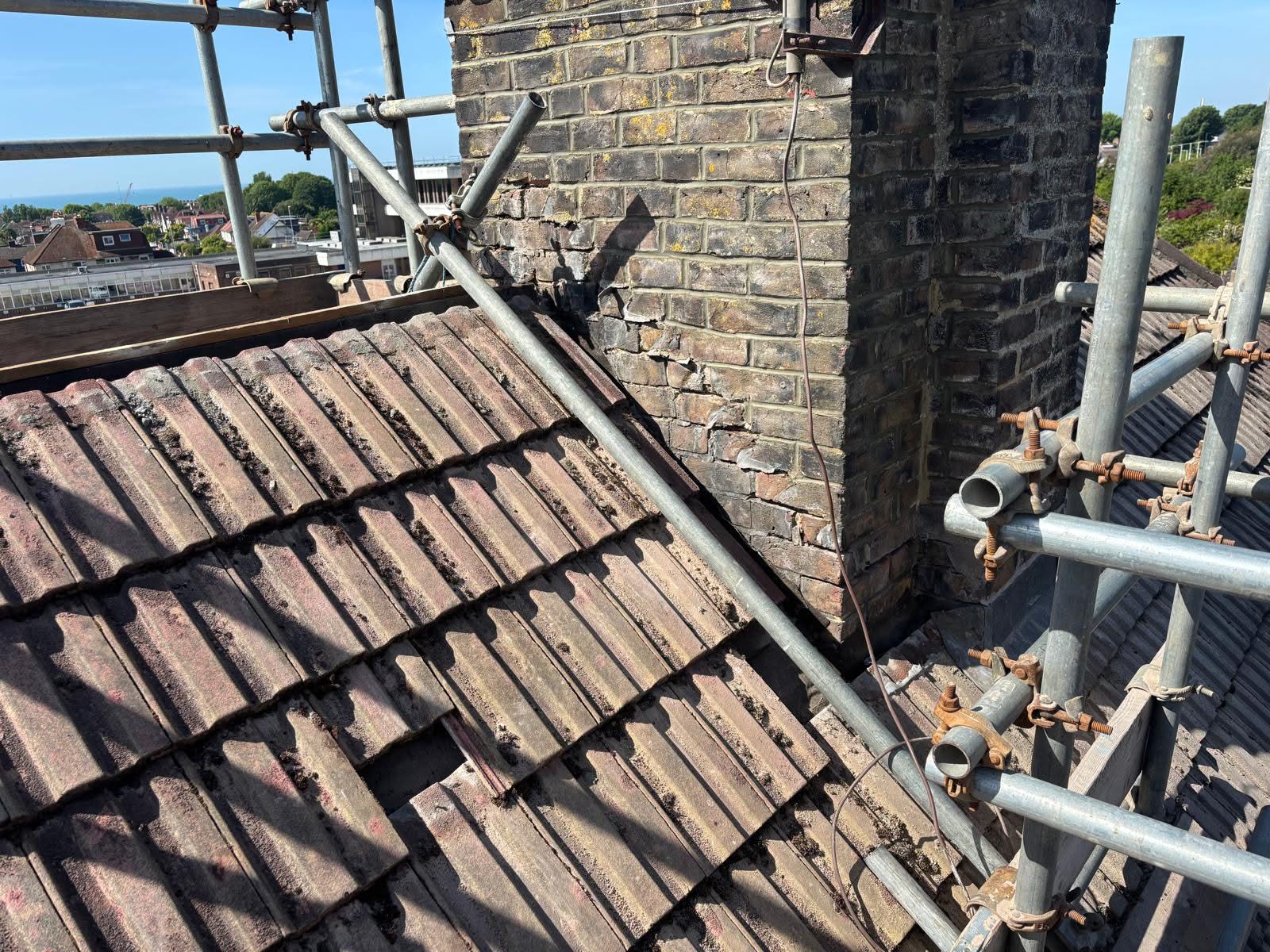
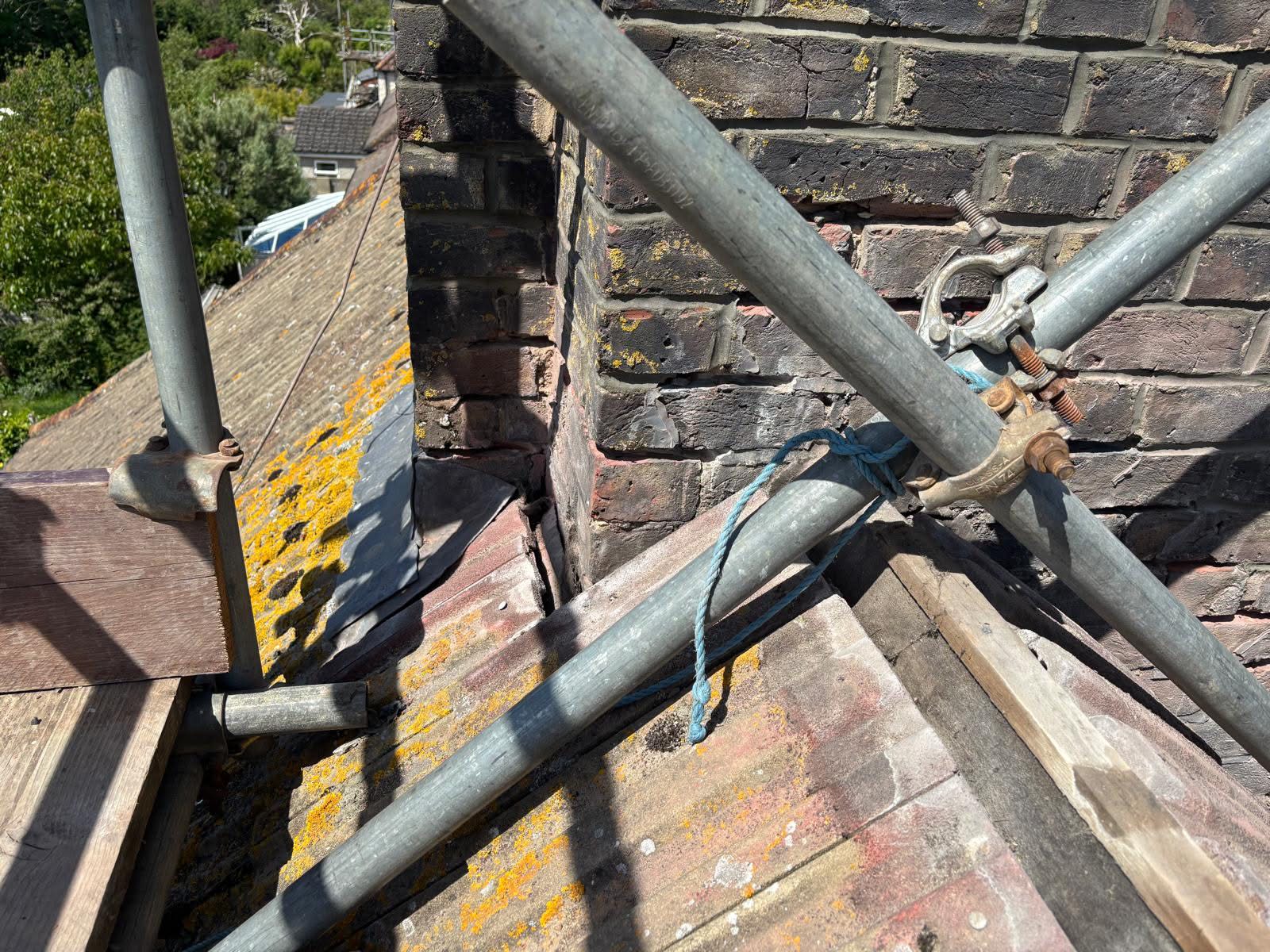
This chimney stack on a Portslade property had reached the point where patching individual faults was no longer viable. The brickwork was heavily weathered and covered in lichen growth, the mortar joints had failed throughout, and the lead flashings had cracked and displaced — allowing water to track into the stack and down into the property. The decision was made to carry out a comprehensive restoration covering every element of the chimney from the pots down to the roofline junction.
The Problem
Chimney stacks take the full force of the weather year-round and are one of the most maintenance-intensive parts of any older property. On this stack, several problems had developed simultaneously:
- Mortar joints had eroded and cracked throughout, allowing water to saturate the brickwork
- Old lead flashings had failed at multiple points — cracked, lifted and no longer sealing the junction between the stack and the roof
- The chimney crown had no effective waterproof coating, letting rain sit on the top of the stack
- Open pot tops with no protection were allowing water to enter the redundant flues directly
Left untreated, water tracking through a chimney stack will eventually reach the ceiling below, cause internal damp and damage the roof structure around it. The only effective solution was a full restoration.
The Work
The restoration was carried out in five stages:
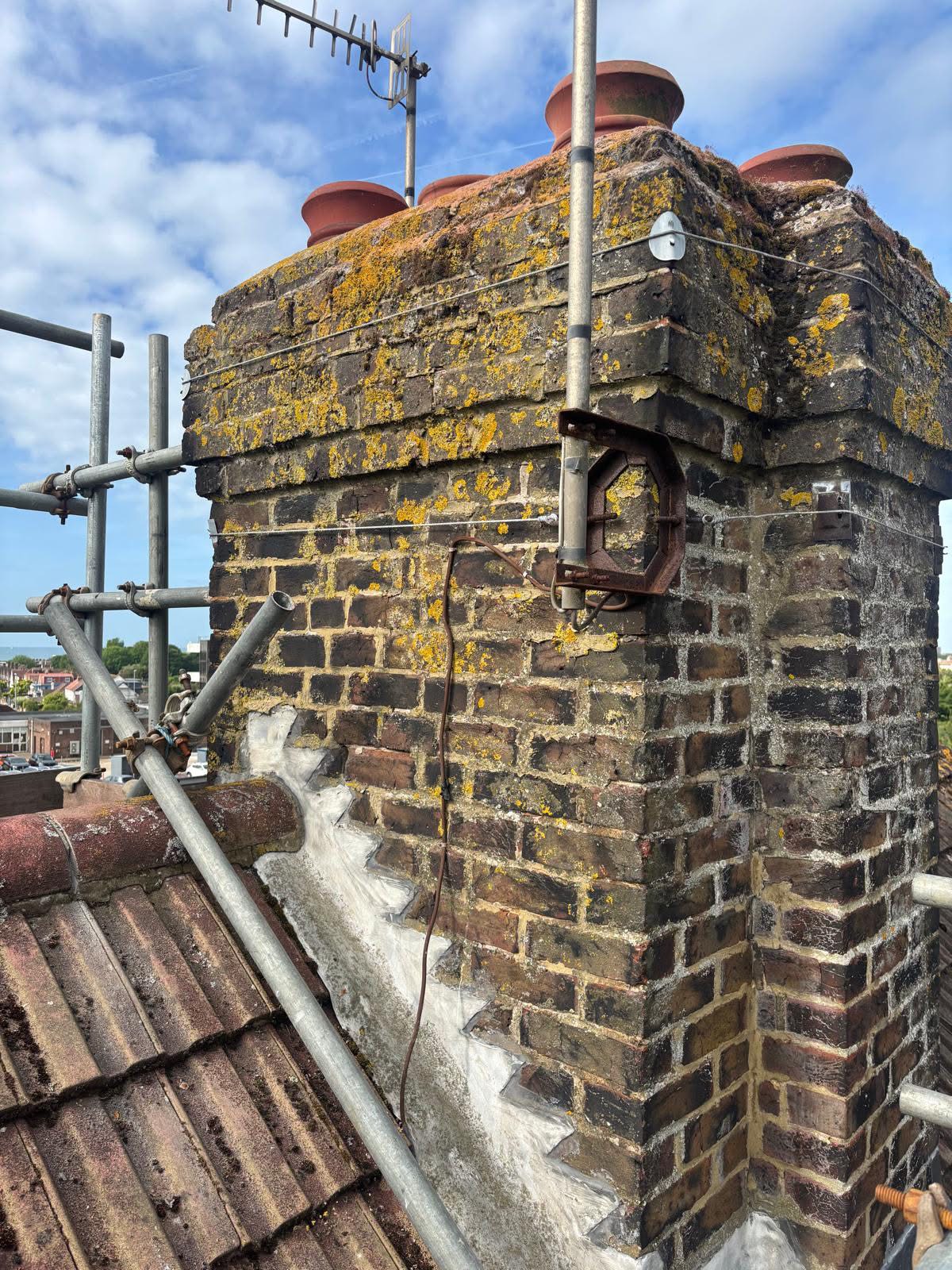
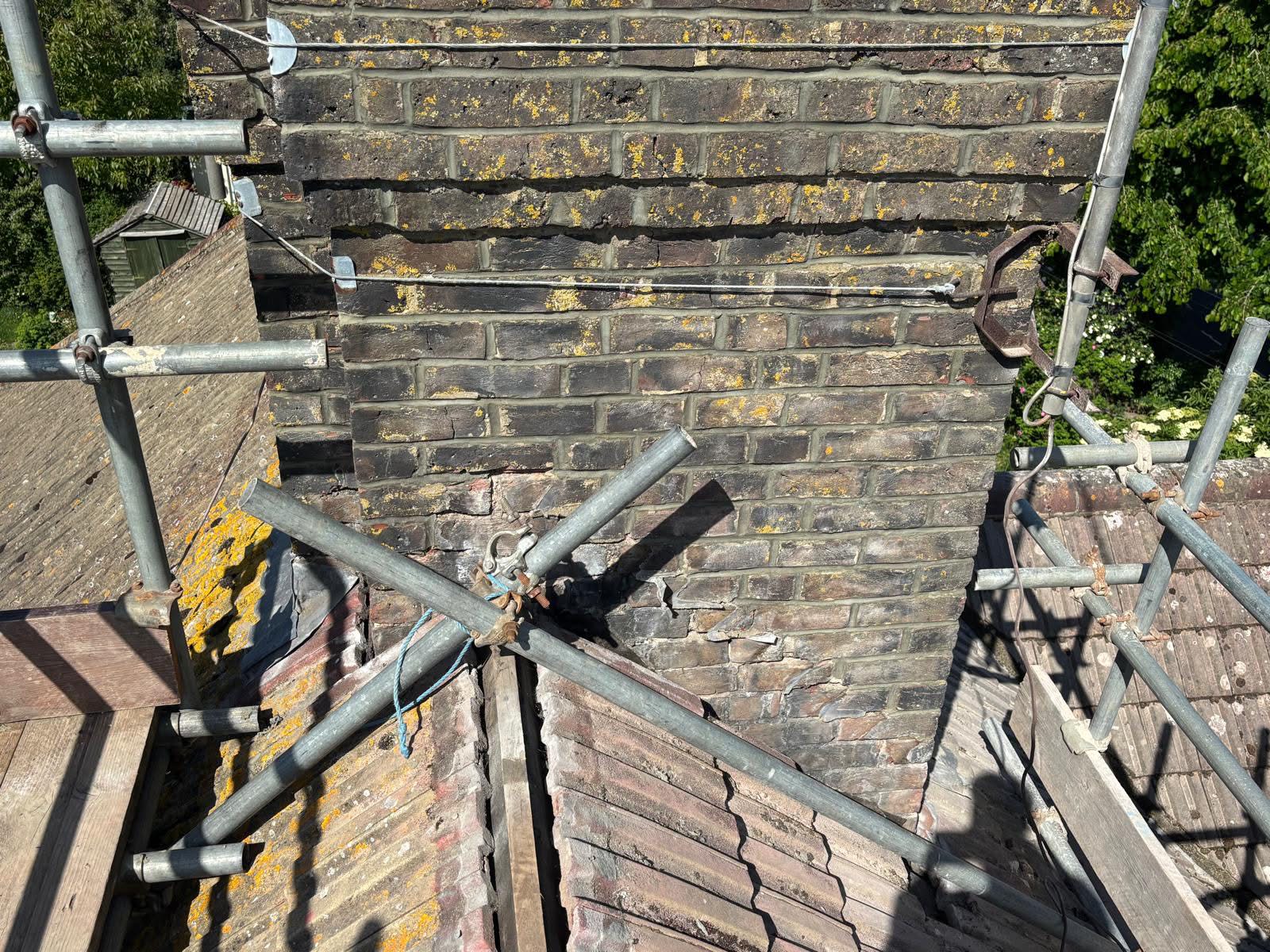
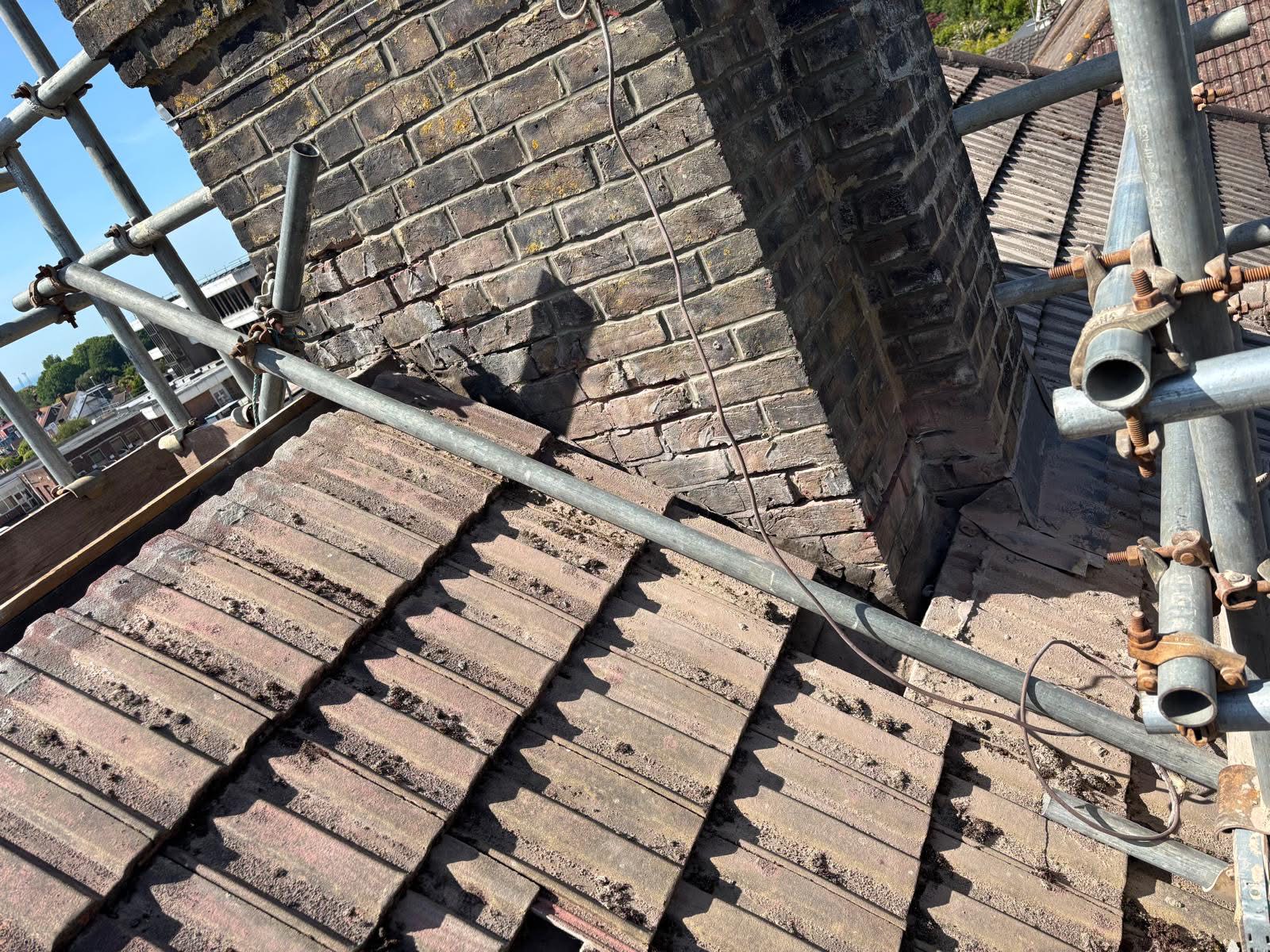
- Repointing. All existing mortar joints were completely ground out using an angle grinder and disc, removing the old failed pointing back to sound brick. Fresh mortar was applied throughout — a mix matched to suit the age and type of the brickwork — with every joint raked out and filled to a consistent depth and profile.
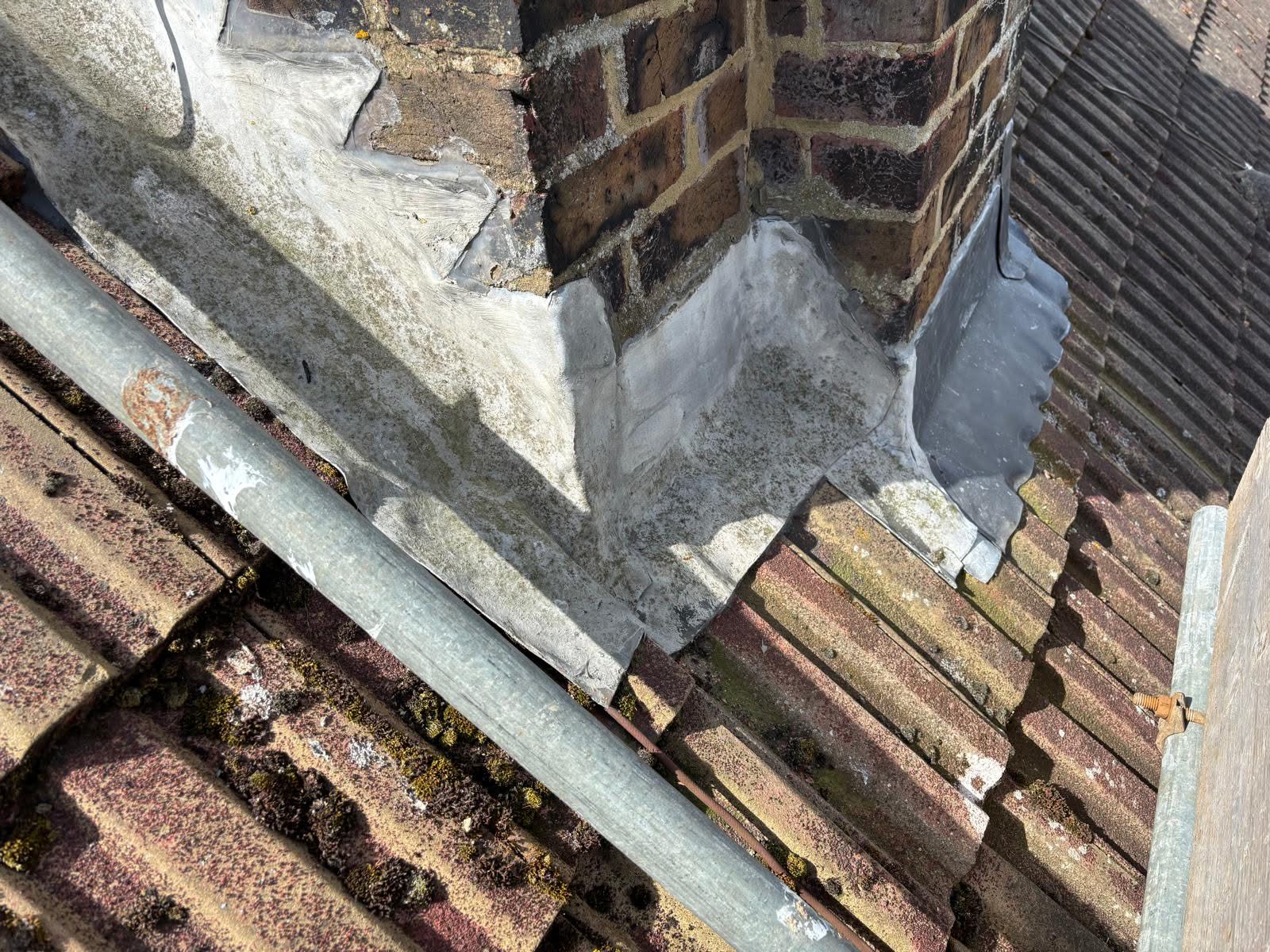
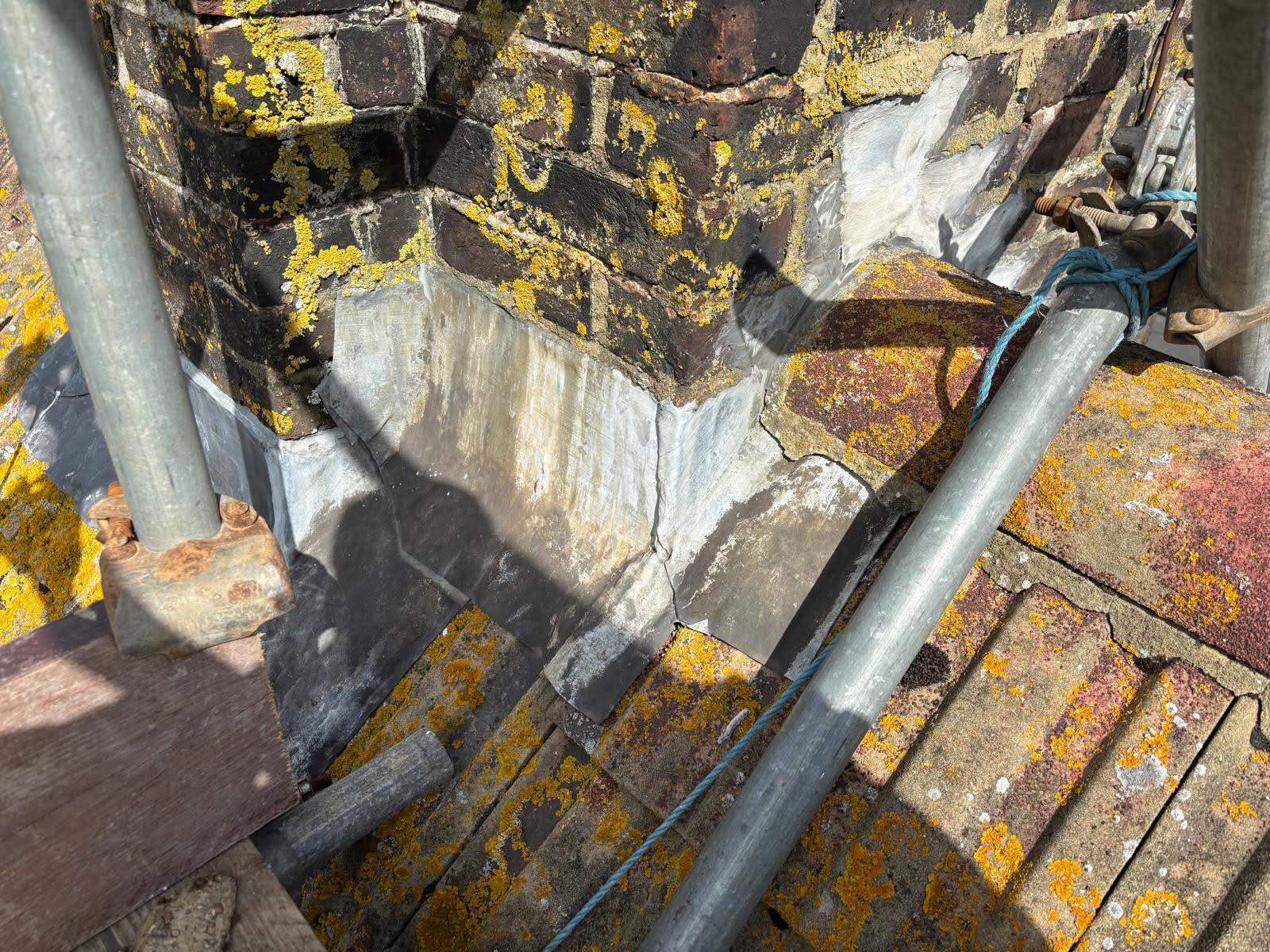
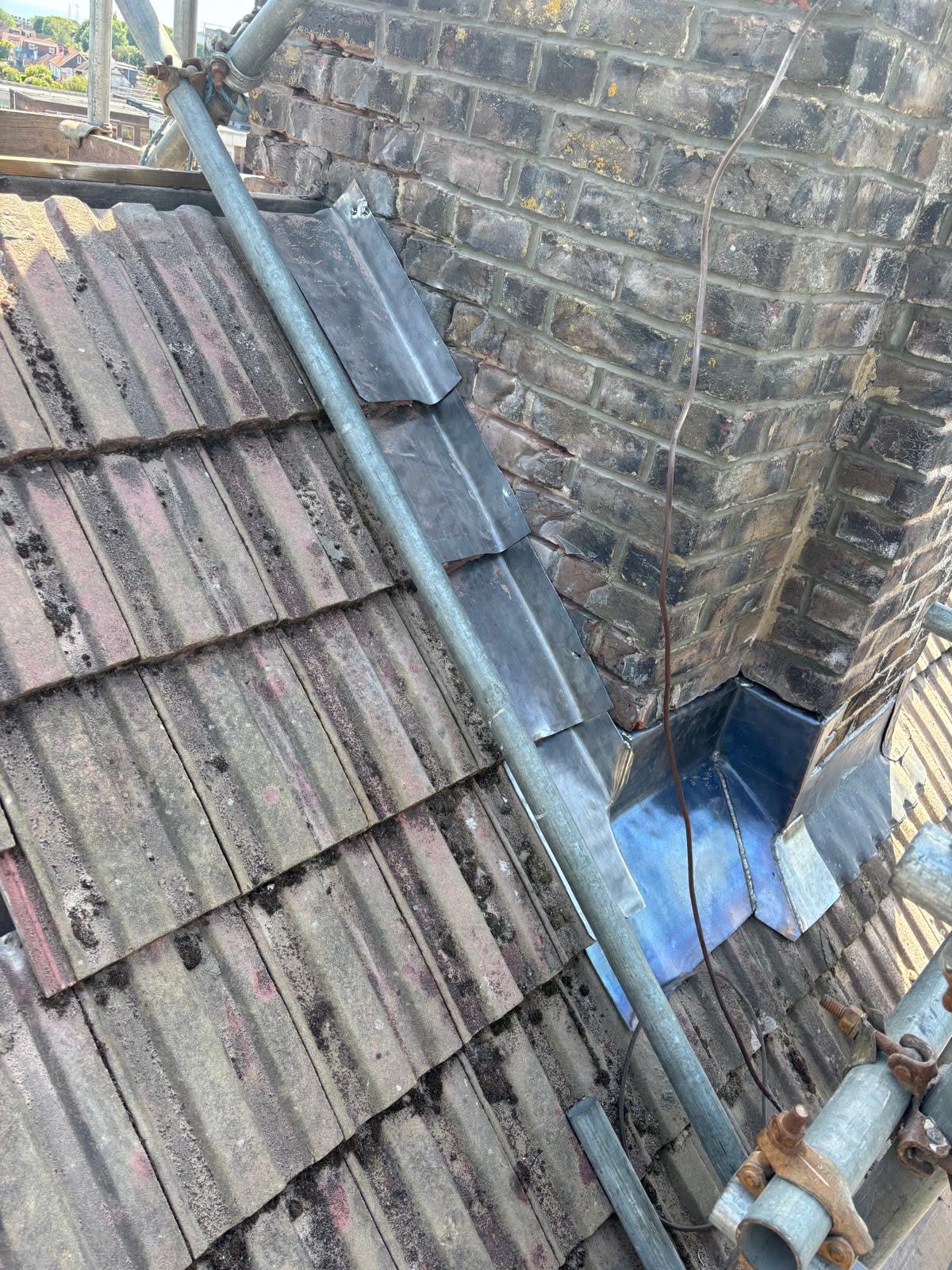
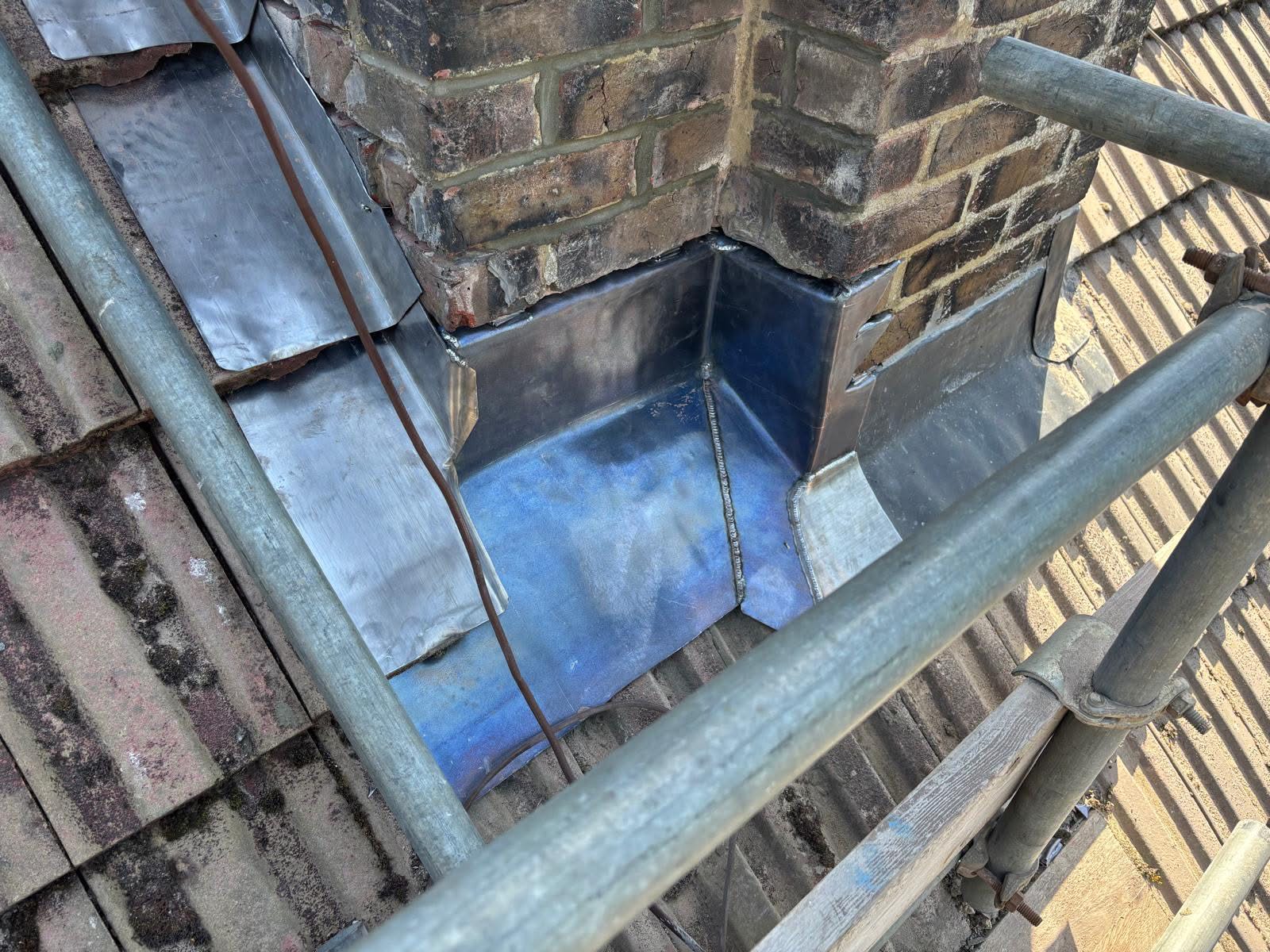
- Lead flashings. All old lead flashings were stripped from the base of the stack. New Code 4 lead step flashings and soakers were cut, dressed and fitted to each face, with a purpose-fabricated lead back gutter installed at the upslope side of the chimney to collect and discharge any water running down behind the stack. All lead was dressed into the mortar joints and secured correctly.
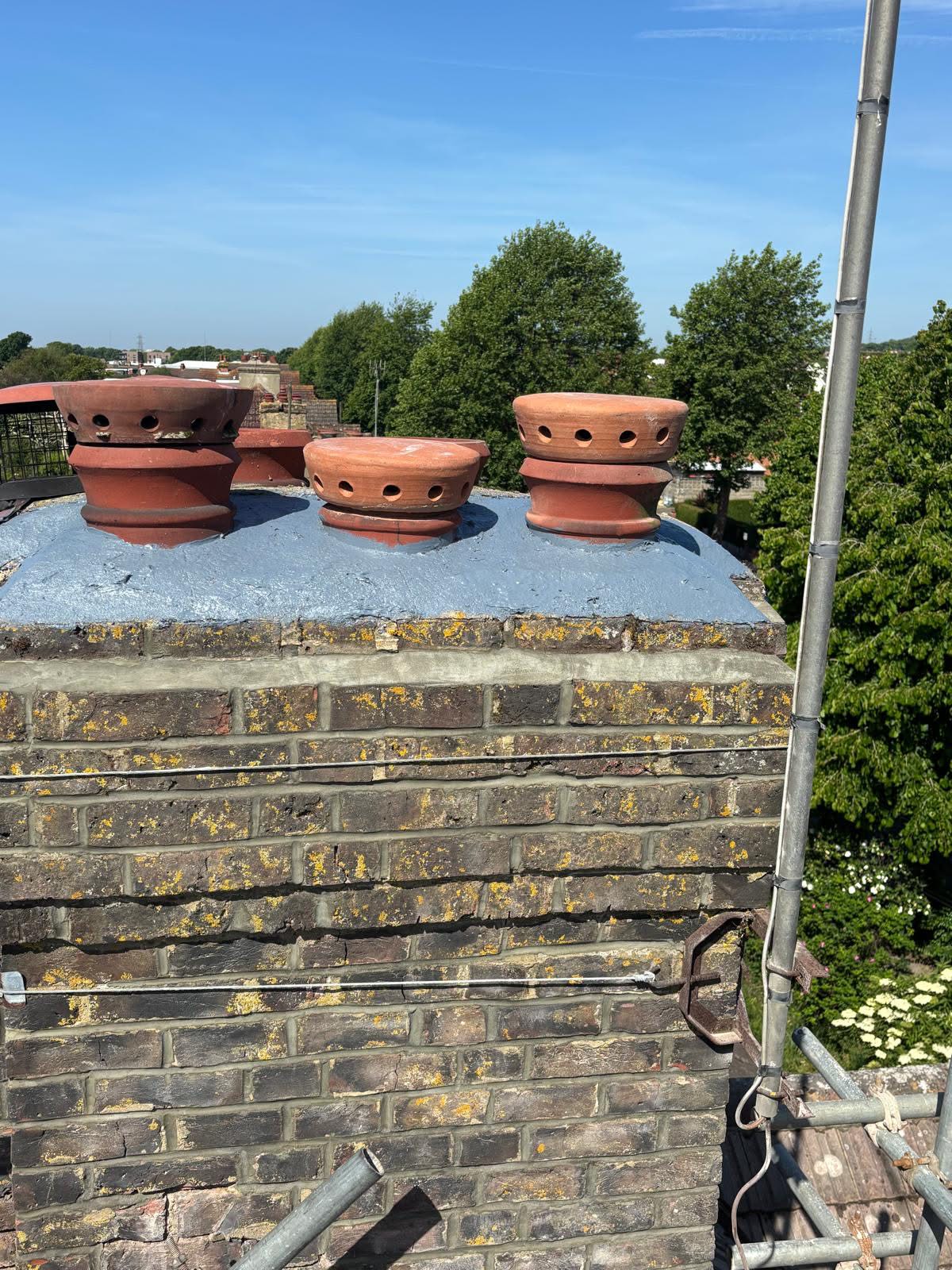
- Aquapol crown sealant. The top of the chimney — including the flaunching around the pots — was treated with Aquapol waterproof sealant to seal the crown and prevent water sitting on or soaking into the top of the stack.
- Flue ventilators. Three flue ventilators were fitted to the chimney pots, replacing the open tops with purpose-made terracotta ventilators that allow air circulation through the flue while preventing rain from entering directly.
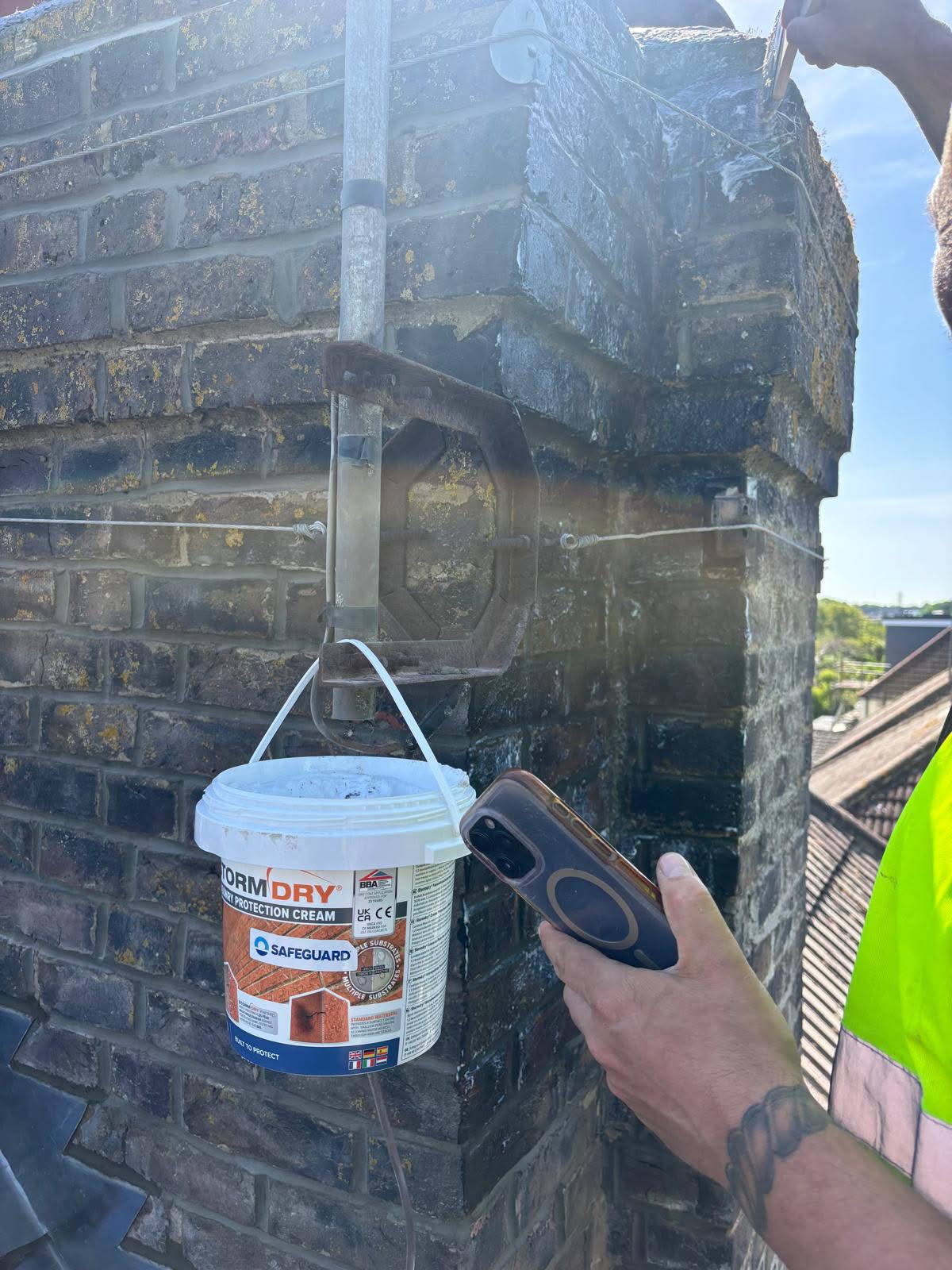
- Stormdry protection cream. As a final stage, Stormdry masonry protection cream by Safeguard was applied to the full face of the repointed brickwork. Stormdry is a BBA-certified breathable water-repellent treatment that penetrates the masonry and significantly reduces water absorption without trapping moisture in the wall.
The Result
Every element of the chimney that was allowing water ingress has been addressed. The brickwork has been fully repointed with fresh mortar throughout, the flashings have been replaced with properly fitted Code 4 lead, the crown and pots are sealed and vented, and the Stormdry treatment gives the brickwork long-term resistance to driving rain. The stack is now fully restored and should require no significant maintenance for many years.
Project Gallery
Frequently Asked Questions
Repointing means removing all the old mortar from the joints — typically by grinding out with an angle grinder — and filling them back with fresh mortar. The old mortar is raked out to a consistent depth, the joint faces are cleaned back to sound brick, and new mortar is pressed in and finished to a profile that sheds water. It is far more thorough than simply applying new mortar over the top of old, which tends to delaminate quickly and can trap moisture behind it.
Lead flashings have a finite lifespan — typically 50 to 80 years depending on the grade and conditions — and once they start to crack and lift, patching rarely gives a lasting repair. Water finds its way under patches, the old lead continues to move with temperature changes, and you end up back on the roof repeatedly. Stripping and replacing with new Code 4 lead, properly fitted with soakers and a back gutter, gives a clean start that should last another generation.
Stormdry is a breathable masonry protection cream made by Safeguard Europe. It is applied to the face of the brickwork where it penetrates the surface and bonds within the pores, dramatically reducing water absorption without sealing or coating the surface. It does not significantly change the appearance of the brickwork and — critically — it allows the wall to breathe, so moisture can still escape from within. It carries BBA certification and is widely used on older masonry that cannot be sealed with an impermeable coating.
Aquapol is a waterproofing compound applied to the flaunching — the sloping mortar collar around the base of the chimney pots — and the top surface of the stack. It seals the crown against standing water, which is one of the main routes by which moisture gets into a chimney stack. Combined with new flue ventilators on the pots, it eliminates both the main points of water entry at the top of the stack.
Capping a redundant flue completely can cause condensation problems inside the chimney breast as the flue is no longer able to breathe. Flue ventilators allow air to circulate through the flue while keeping rain out — they have a design that prevents water entry even in driving rain. They are the standard recommendation for redundant but retained chimneys and are far preferable to a solid cap.
Need Similar Work?
We deliver the same quality and attention to detail on every project. Get in touch to discuss your requirements.